Chicago’s location at the southern end of Lake Michigan puts it within striking distance of two states (Wisconsin and Indiana) and a wide range of landscapes - lake dunes, river canyons, hill country, and several well-preserved 19th-century towns. Most of these trips work by car, but Milwaukee and Indiana Dunes are reachable by train. Compare car hire rates if you’re planning a driving trip.
The things to do in Chicago cover the city in detail. When the city calls for a break, here are seven of the best options within 3 hours.
Indiana Dunes National Park - 1 hour south via I-90/I-94 or South Shore Line
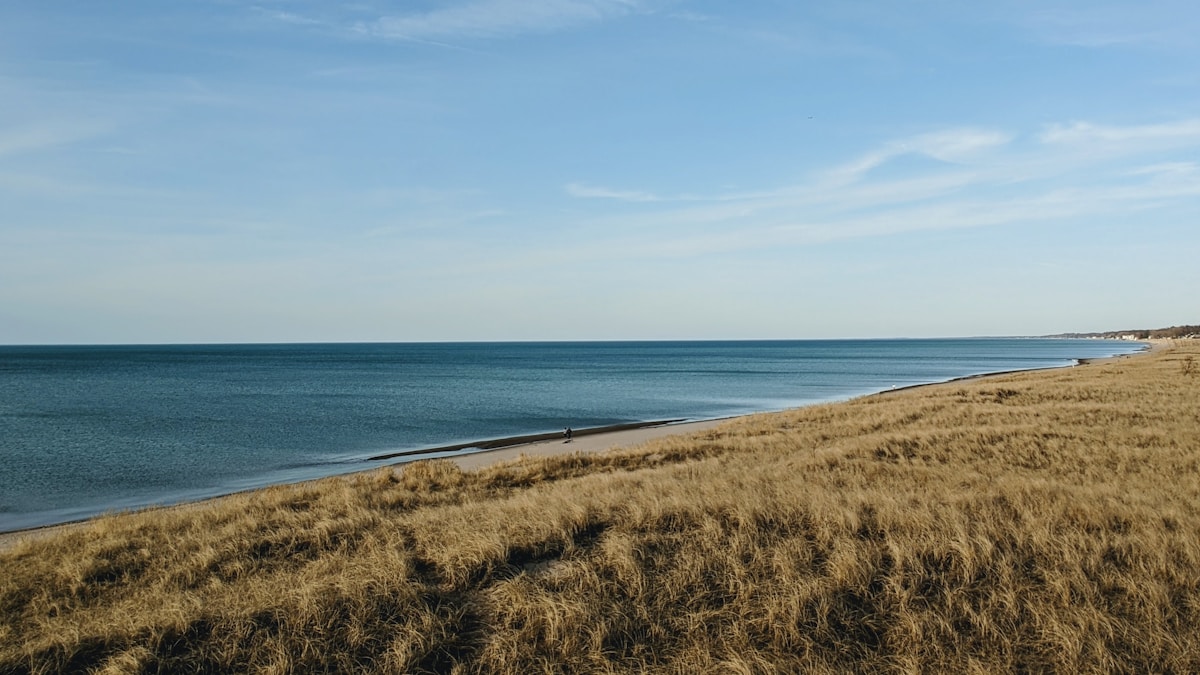
Indiana Dunes became a National Park in 2019, which brought federal resources to a landscape that had been a state park for decades - 15 miles of Lake Michigan shoreline with active sand dunes, wetlands, oak savannas, and rivers, all within 50 miles of downtown Chicago.
Park entry is free for pedestrians; a weekly vehicle pass costs approximately $25 as of 2026, or is covered by an America the Beautiful annual pass (~$80). The South Shore Line commuter rail from Millennium Station in Chicago stops at Dune Park and Beverly Shores, making this one of the few genuinely car-free nature day trips from the city.
Mount Baldy is the park’s tallest dune at 126 feet - it moves approximately 4 feet per year as wind pushes it south, slowly burying the forest behind it. Guided hikes to the summit run in summer (free with park entry; check nps.gov for current schedule). Cowles Bog has a 4.7-mile trail through what botanists call “the world’s most complex bog” - a rare temperate bog with carnivorous plants, orchids, and a series of distinct plant communities layered by elevation and moisture.
The Three Dunes Challenge (1.5 miles) climbs three major dunes in succession - a short but genuinely strenuous route that most people underestimate. The West Beach and Portage Lakefront areas have good swimming facilities. Water temperatures in Lake Michigan are cold in June (around 55°F) and peak around 70°F in August.
Dunes Pavilion at West Beach has a cafe and restrooms. The town of Chesterton, 10 minutes from the park, has several restaurants - Lucrezia Café (Italian, mains approximately $18–$28) is well-regarded locally.
Book Chicago area tours and experiences
Milwaukee - 1 hour 30 minutes north on I-94
Milwaukee has undergone a sustained reinvention over the past two decades, turning its Lake Michigan lakefront and historic industrial buildings into attractions rather than liabilities. The city is compact enough to cover significant ground in a day.
The Milwaukee Art Museum (entry approximately $20 as of 2026) is worth visiting for the building as much as the collection. Santiago Calatrava’s Quadracci Pavilion (2001) has a moveable sunscreen system of white steel wings that opens and closes daily - a genuine piece of engineering theater. The collection has a strong Wisconsin folk art and American decorative arts section in addition to the European galleries.
Lakefront Brewery (tours approximately $12 including tastings as of 2026) operates in the city’s 1907 Estabrook Power Plant on the Milwaukee River - a legitimate craft brewery with a Friday night fish fry that has become a Milwaukee institution. The Third Ward neighborhood, immediately south of downtown, has converted 19th-century warehouse buildings into the city’s restaurant and gallery district. Colectivo Coffee (multiple locations), roasting since 1993, is reliably good for a break.
The Milwaukee Public Market in the Third Ward (free entry) has a strong selection of Wisconsin specialty foods - cheese, brats, Door County cherries, and Midwest craft spirits. Benelux (Belgian-American, brunch/lunch mains approximately $14–$22) occupies a former warehouse overlooking the Third Ward streetscape.
Amtrak’s Hiawatha service (approximately $25 each way, 1 hour 30 minutes) makes this a realistic car-free day trip from Chicago.
Galena, IL - 3 hours northwest on US-20
Galena sits in the Driftless Area of northwest Illinois - a region that glaciers missed, leaving it with steep river bluffs and hollows unlike the flat agricultural plains that dominate the state. The town itself grew wealthy from lead mining in the 1820s–1850s, leaving behind a remarkably intact collection of Federal and Italianate commercial architecture.
Main Street is the core of the historic district - a street that descends steeply to the Galena River with mid-19th century storefronts on both sides. Independent antique shops and art galleries occupy most of the ground-floor retail; the density of worthwhile antique dealers is genuine rather than staged.
The Ulysses S. Grant Home State Historic Site (entry approximately $5 as of 2026) is a two-story Italianate home that citizens of Galena gave to Grant after the Civil War. The town sent more Union Army officers to the war than any comparable American community, and the museum documents this history in detail with original artifacts. The Galena History Museum (entry approximately $6 as of 2026) fills in the lead-mining era.
Eagle Ridge Resort covers 6,800 acres of hills above Galena - a four-season resort with golf, hiking, and boating on the Galena Territory’s private lake. Day visitors can use the resort restaurants and hiking trails without staying overnight.
Search hotels in Chicago on Booking.com
For food, Otto’s Place and Log Cabin Steakhouse are Galena institutions; both serve local-focused menus in the approximately $20–$40 range for dinner. The area around Galena has several small wineries - Galena Cellars has a tasting room on Main Street (tastings approximately $10–$15 as of 2026).
Starved Rock State Park - 1 hour 30 minutes southwest on I-80 then IL-178
Starved Rock is the most visited state park in Illinois - 18 canyons carved by glacial meltwater through sandstone bedrock, with waterfalls in spring (typically March–May) and lush canyon walls through summer. Entry to the park is free.
The canyons range from 40 to 80 feet deep, carved by streams tributary to the Illinois River. The most dramatic are LaSalle Canyon (with a waterfall and pool at the back), St. Louis Canyon, and French Canyon - all accessible on trail loops of 2–4 miles starting from the main lodge. The Starved Rock Lodge (a 1930s CCC-built log structure) has a restaurant and maintains some rooms if you want to overnight.
The Illinois & Michigan Canal Trail follows the former 1848 canal towpath along the river - a flat, easy surface that extends 61 miles and connects multiple state parks. The stretch through Starved Rock gives context for the 19th-century economic importance of the waterway.
Spring visits (March–May) offer the best waterfall flow; fall foliage peaks in October. Summer is the most crowded - weekday visits in July are significantly quieter than weekends. The parking lots at the main trailhead fill by 10am on summer weekends; arrive early or use the secondary lot on East Lover’s Lane.
Starved Rock Lodge restaurant serves lunch and dinner (mains approximately $15–$30); the town of Utica, 10 minutes away, has additional dining options.
Madison, WI - 2 hours 30 minutes northwest on I-90/I-39
Madison occupies a narrow isthmus between two lakes - Mendota and Monona - which gives the city a distinctive geography and a lakefront culture unusual for a state capital. The University of Wisconsin dominates the east end of the isthmus; the State Capitol building anchors the west.
The Wisconsin State Capitol (free to tour, guided tours run hourly) has a Wisconsin granite and marble dome that is the only state capitol with a dome made of granite rather than iron or steel - the exterior is impressive, and the interior rotunda and legislative chambers are open to visitors.
State Street connects the Capitol to the University and is entirely car-free - a pedestrian corridor of restaurants, coffee shops, and independent retailers with the urban energy that college towns generate. The Memorial Union Terrace on Lake Mendota (free to access) has Adirondack chairs in the Wisconsin colors, a beer garden, and live music in summer - one of the genuinely pleasant public spaces in the Midwest.
The Chazen Museum of Art on the UW campus (free) has a collection of more than 22,000 works, strongest in prints and works on paper. Overture Center for the Arts (tickets vary) is the city’s main performing arts venue with a notable building by César Pelli.
For food, Madison has a strong dining scene for its size. L’Etoile (French-influenced, fine dining, mains approximately $35–$55) is a Midwest landmark; Forequarter (small plates, approximately $15–$25 each) is excellent for a more casual meal.
Lake Geneva, WI - 1 hour 30 minutes north on I-94 then US-12
Lake Geneva was a summer resort town for wealthy Chicagoans in the late 19th century - the 26 miles of shoreline have a dense collection of historic estates, many still privately owned. The town itself sits on the northwest corner of the lake.
The Geneva Lake Shore Path (21 miles, completely flat) circles the entire lake and passes directly through the grounds of every shoreline estate - a public easement has existed since the 19th century, and property owners cannot block it. This means you walk through private manicured grounds, past boathouses, and along private docks without any admission fee. The section from downtown to the Yerkes Observatory and back (approximately 8 miles round-trip) is the most rewarding stretch.
Yerkes Observatory in the village of Williams Bay (approximately 10 minutes from Lake Geneva town) houses the world’s largest refracting telescope, completed in 1897. The facility has had varying public access depending on operator - verify current tour availability at yerkesrestorationproject.org before visiting.
Downtown Lake Geneva has a Riviera-style beach house (built 1933) and a busy waterfront with paddle boat and kayak rentals (approximately $20–$30/hour as of 2026). Scuttlebutts on Wrigley Drive is a local institution for perch and walleye (mains approximately $15–$25); the town also has a good concentration of ice cream parlors and bakeries for a lighter stop.
Wildlife Prairie Park and Dickson Mounds - 2 hours 30 minutes south
This pairing works as a longer day trip into central Illinois - two stops that cover natural history and the Prairie State’s deep past in a genuinely rewarding way.
Wildlife Prairie Park near Peoria (admission approximately $10 as of 2026) is a 2,000-acre park with native Illinois wildlife - bison, wolves, black bears, elk, and raptors - in large naturalistic enclosures. It’s part zoo, part state park, and particularly good with children. The park operates a restored 1880s farm and a small steam railroad.
Dickson Mounds Museum near Lewistown (free) is an Illinois State Museum site built over a 12th-century Mississippian-period village and cemetery. The exhibits cover 12,000 years of Illinois human history, with strong interpretive material on the mound-building cultures and excellent artifact collections. The museum grounds overlook the Illinois River valley.
Carl Sandburg’s birthplace in Galesburg (free to tour the small home; grounds always open) rounds out the literary side of central Illinois - the Pulitzer Prize-winning poet and Lincoln biographer was born in this small three-room cottage in 1878. Galesburg itself has a pleasantly quiet historic downtown with the Silas Willard Library (1905) and several Victorian-era buildings.