New York City’s transit network - Metro-North, the Long Island Rail Road, Amtrak, and a handful of ferry routes - makes it genuinely possible to reach forests, beaches, colonial cities, and wine country without a car. That said, having one opens up the Catskills and Harriman State Park in ways transit can’t match. Compare car hire rates if you’re planning multiple stops or heading somewhere rural.
Beyond the things to do in New York City itself, the surrounding region has an extraordinary range of landscapes within a 3-hour radius. Here are eight of the best options.
Hudson Valley / Cold Spring - 1 hour 30 minutes north by Metro-North
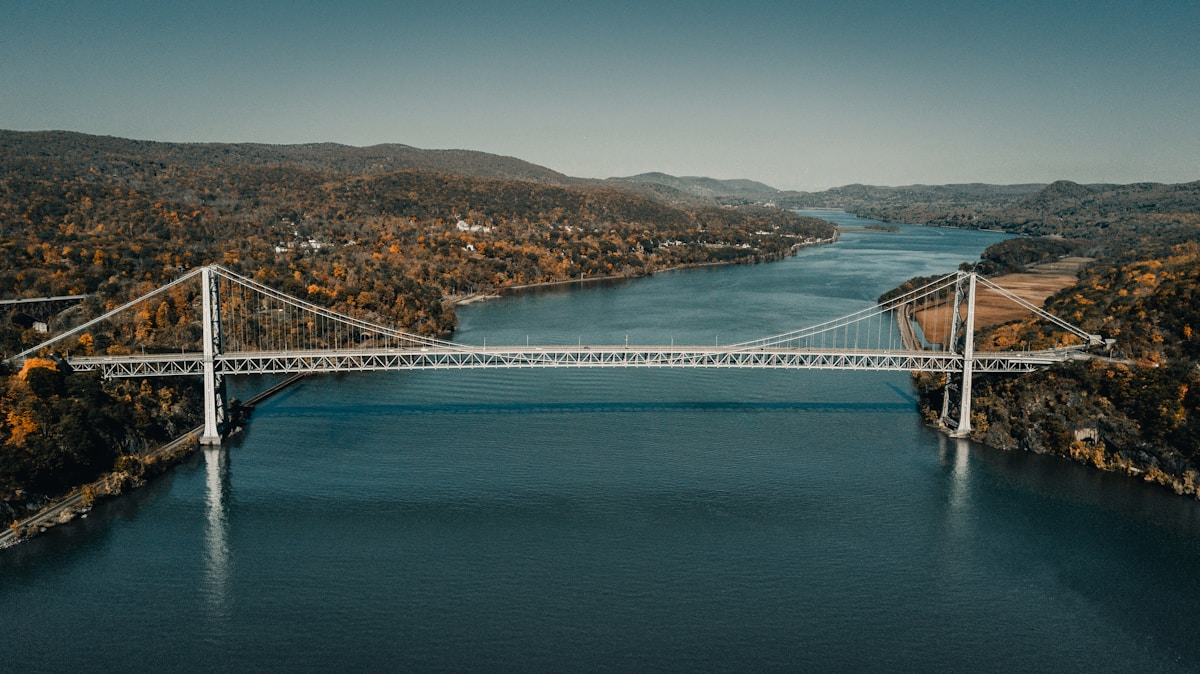
The Hudson Valley is the most accessible nature day trip from Manhattan, requiring no car and minimal planning. Take the Metro-North Hudson Line from Grand Central Terminal to Cold Spring - trains run hourly and the ride takes approximately 1 hour 40 minutes, with fares around $20 each way as of 2026.
Cold Spring village sits directly on the Hudson River with a short main street of independent shops and cafes. The Hudson Highlands State Park Preserve begins practically at the train station - the Bull Hill (Mount Taurus) trail offers Hudson River views after about 1.5 miles of moderate climbing.
Storm King Art Center (entry approximately $18 as of 2026) is a 500-acre open-air sculpture museum set across rolling hills, with large-scale works by Alexander Calder, Richard Serra, Maya Lin, and others. It’s reachable from the Beacon train station by shuttle bus during summer. Storm King is best visited on a weekday in May or October when crowds thin out.
Dia Beacon (entry approximately $15 as of 2026), a converted factory on the Hudson riverfront in Beacon, houses Dia Art Foundation’s large-scale collection - Donald Judd’s stacked aluminum boxes, Richard Serra’s curved steel slabs, and Dan Flavin’s fluorescent light works. Beacon is a 10-minute drive north of Cold Spring or one stop further on Metro-North.
For food, Quinn’s in Cold Spring serves reliable American bistro food (mains approximately $20–$30), and there are several bakeries and delis along Main Street for a cheaper lunch.
Search hotels in New York City on Booking.com
The Hamptons - 2 to 3 hours east by LIRR
The Hamptons covers a string of villages across the South Fork of Long Island - Westhampton, Southampton, Bridgehampton, East Hampton, Amagansett, and Montauk. Each has a distinct character, and the distance from Manhattan (plus seasonal demand) means the eastern villages feel genuinely remote despite being on Long Island.
Sag Harbor is the most historically intact of the Hamptons villages - a former whaling port with 18th and 19th-century architecture, independent bookshops, and less conspicuous wealth than the Southampton or East Hampton core. The Sag Harbor Whaling and Historical Museum (entry approximately $10 as of 2026) occupies a house built by a ship’s carpenter in 1845.
Montauk at the eastern tip of Long Island is 2 hours 45 minutes from Penn Station by LIRR. The Montauk Lighthouse (entry approximately $9 as of 2026) has been operating since 1796 and offers views up and down the coast from its observation deck. The beaches here - Ditch Plains for surfing, Kirk Park for calmer water - are less crowded than those closer to Southampton.
East Hampton Village itself has two good free beaches for day visitors: Main Beach and Egypt Beach. Parking fills by 9am on summer weekends; arriving by train is far easier.
Fire Island - 2 hours via LIRR to Bay Shore, then ferry
Fire Island is a barrier island off Long Island with no roads and no cars - travel is by foot, bicycle, or water taxi along its 32-mile length. The Fire Island National Seashore covers most of the island and is free to enter.
The Ocean Beach community is the most lively village and the easiest to reach: take the LIRR to Bay Shore, then the Fire Island Ferry (approximately $12–$15 each way as of 2026, running May through October). Ocean Beach has restaurants, a market, and a genuinely unhurried pace. Sailors Haven and Watch Hill have Sunken Forest Nature Trails through maritime forest - a rare Atlantic white cedar grove that feels nothing like suburban Long Island.
The ocean beach itself is excellent - wide, clean, and with lighter crowds than Coney Island or Jones Beach. This trip works best on a clear weekday; summer weekends at Ocean Beach get crowded.
Philadelphia - 1 hour 20 minutes by Amtrak
Philadelphia is the easiest city day trip from New York. Amtrak’s Northeast Regional runs from Penn Station to 30th Street Station roughly every hour, with fares from approximately $30 each way as of 2026. The journey takes 1 hour 15–30 minutes depending on the service.
The Liberty Bell and Independence Hall (both free, though Independence Hall tours require timed tickets reserved in advance) anchor the historic district. Eastern State Penitentiary (entry approximately $22 as of 2026), a Gothic castle-like prison that held Al Capone, is one of the most atmospheric historic sites on the East Coast - cell blocks, guard towers, and solitary confinement units are open for self-guided exploration.
Reading Terminal Market (free entry, food from approximately $8–$20 per person) is one of the country’s great covered markets - Pennsylvania Dutch vendors selling scrapple, shoofly pie, and soft pretzels alongside cheese counters, oyster bars, and excellent sandwiches. It’s been operating continuously since 1893. The Philadelphia Museum of Art (entry approximately $25, or free on the first Sunday of each month) anchors the Parkway with one of the country’s strongest Impressionist and American collections.
Book Philadelphia and NYC area tours
The Catskills - 2 hours north by car
The Catskill Mountains require a car - there’s no practical transit option for exploring the interior. From Manhattan, the heart of the Catskills (Woodstock, Phoenicia, Catskill village) is about 2 hours via I-87 north and NY-28.
Woodstock is the best-known village - a mix of art galleries, record shops, spiritual retreat centers, and cafes that still carries its 1960s cultural legacy, despite the famous 1969 festival having actually taken place 60 miles southwest in Bethel. For the actual festival site, the Bethel Woods Center for the Arts (museum entry approximately $15 as of 2026) has a museum documenting the event in detail.
Kaaterskill Falls is the highest two-stage waterfall in New York State - a 260-foot drop in two tiers through a hemlock gorge. The trailhead is on NY-23A near Palenville; parking costs approximately $6 as of 2026, and the hike to the base of the upper falls is about 0.8 miles. It’s crowded on summer weekends - arrive before 9am or visit on a weekday.
Hunter Mountain (ski resort in winter, zip lines and mountain coaster in summer) is 20 minutes from the falls and adds a good activity option. Phoenicia is a small town with excellent food for its size - the Phoenicia Diner has strong reviews and reasonable prices for the region (breakfast and lunch around $15–$20 per person).
Princeton, NJ - 1 hour by NJ Transit
Princeton is reachable by NJ Transit from Penn Station via the Princeton Junction connection - approximately 1 hour with fares around $20 each way as of 2026. It works best as a half-day trip combined with another stop.
Princeton University’s main campus is a handsome concentration of Gothic and Collegiate Gothic architecture - the campus tours (free, departing from the Orange Key Guide Services) cover Nassau Hall, the University Chapel, and the residential colleges. The Princeton University Art Museum is free and has a strong collection of American and Asian art, though it has been undergoing renovation phases in recent years - verify opening hours before visiting.
The Institute for Advanced Study, where Einstein worked from 1933 until his death in 1955, is a short walk from campus. The grounds and Fuld Hall building exterior are accessible to visitors; the research facilities themselves are not open to the public.
Princeton’s Nassau Street has good independent bookshops and restaurants. Agricola (farm-to-table, dinner mains approximately $30–$40) and Mistral (Mediterranean, similar price range) are reliable options for lunch or early dinner.
Harriman State Park - 1 hour by car
Harriman State Park, 35 miles northwest of Manhattan in Rockland County, is the closest serious hiking terrain to New York City - 200 square miles of forested ridgelines, lakes, and rocky summits accessible without any entry fee.
The Appalachian Trail passes through the park, but most day visitors focus on the southern section’s loop trails around Lake Tiorati (parking approximately $7 as of 2026) and Lake Sebago. The Ramapo-Dunderberg Trail (approximately 24 miles total, but easily hiked in sections) takes in multiple ridgelines and open rock faces with views south toward the Meadowlands.
The Pine Meadow Lake loop (approximately 8 miles, moderate) is one of the most popular circuits - it combines a lake shoreline with exposed ridge walking. Go on a weekday in September or October for the best balance of fall color and manageable crowds. No camping is permitted without a reservation; day use is first-come, first-served at the parking areas.
Newport, Rhode Island - 3 hours by car or bus
Newport requires the most travel time on this list but delivers something distinct: the densest concentration of Gilded Age mansions open to the public anywhere in the United States. The most important are operated by the Preservation Society of Newport County - combination tickets covering multiple properties run approximately $35–$50 as of 2026.
The Breakers (entry approximately $29 as of 2026) is the most visited - Cornelius Vanderbilt II’s 70-room Italian Renaissance palace, completed in 1895, with interiors that still communicate extraordinary scale and wealth. Marble House, a marble-clad gift from William Vanderbilt to his wife, has comparably detailed interiors. Allow 90 minutes per mansion if you’re doing the full tour.
The Cliff Walk (free, 3.5 miles) runs along the Atlantic Ocean directly behind the mansion row - you get exterior views of the Breakers, Rough Point, and Ochre Court without buying a ticket, and the ocean views are excellent. Newport’s downtown waterfront (Thames Street) has seafood restaurants and shops; The Mooring (seafood, mains approximately $25–$45) is well-positioned on the harbor.
Greyhound and FlixBus run service from Port Authority Bus Terminal to Newport in approximately 3 hours with fares from around $20 each way as of 2026.