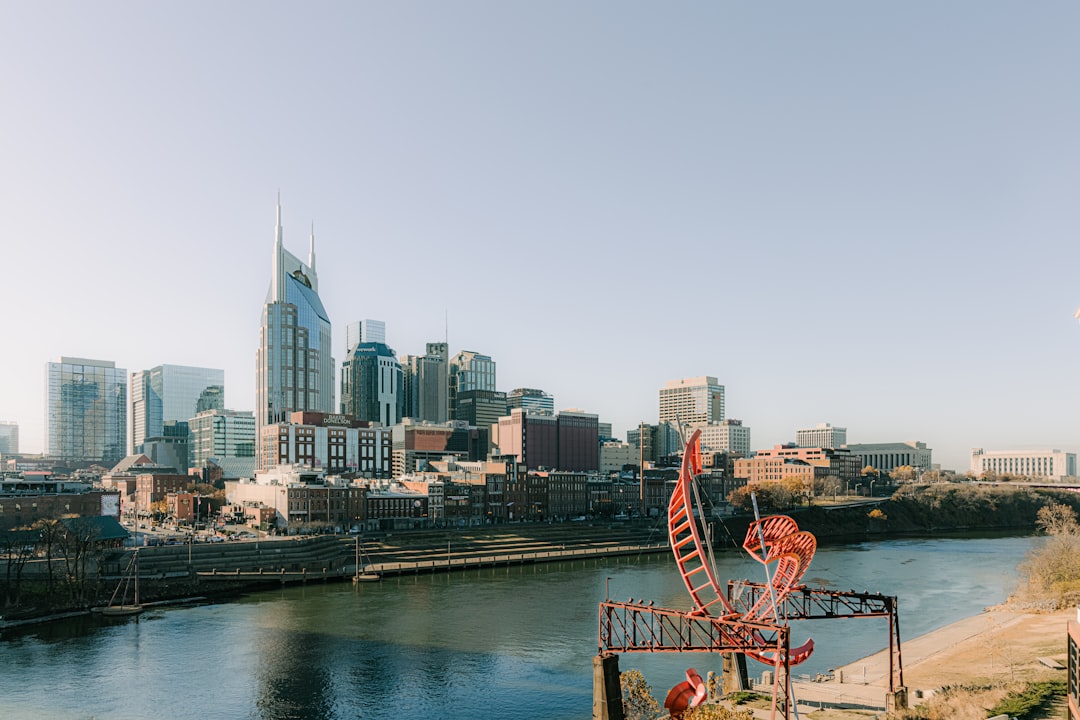
Nashville sits at the center of Middle Tennessee with quick access to Kentucky to the north, Alabama to the south, and the western edge of the Appalachians to the east. The surrounding region is rich in Civil War history, distillery culture, cave systems, and outdoor recreation - none of which requires more than 3 hours by car. Almost all of these day trips require a car; compare car hire rates before you go.
For ideas on what to do in the city, see our Nashville things to do guide. For accommodation when using Nashville as a base, see our Nashville hotels guide.
Search hotels in Nashville on Booking.com
Jack Daniel’s Distillery, Lynchburg - 1 hour 30 minutes south
The Jack Daniel’s Distillery in Lynchburg is the oldest registered distillery in the United States, dating to 1866, and produces one of the best-known American spirits in the world. The town of Lynchburg (population approximately 6,000) sits in Moore County - which remains a dry county by local ordinance, meaning you can visit the distillery and buy bottles on-site but cannot order a Jack and Coke at the local bar.
The standard distillery tour (free as of 2026) covers the cave spring where Jack Daniel sourced his limestone-filtered water, the barrel warehouse, and the Lincoln County Process - the charcoal mellowing that distinguishes Tennessee whiskey from bourbon. Premium tours (approximately $25 as of 2026) include barrel-side tastings and access to the warehouse interior.
Miss Mary Bobo’s Boarding House in Lynchburg town square is a Southern lunch institution that has operated since 1908 - a family-style midday meal with typically 10–12 dishes including fried chicken, cornbread, and seasonal vegetables for approximately $30 per person as of 2026. Reservations are required and book out weeks in advance in summer; reserve before planning your visit. Seating is at communal tables with a local host.
The Jack Daniel’s barrel warehouse complex on the hillside above the distillery has approximately 80 barrels stacked inside each structure - the largest aging operation of any American distillery. The smell of evaporating whiskey (the “angels’ share”) is noticeable downwind of the warehouses.
Book Nashville and Tennessee whiskey trail tours
Mammoth Cave National Park - 2 hours north
Mammoth Cave is the world’s longest known cave system, with more than 400 miles of explored passages in the limestone karst of south-central Kentucky. The park surrounds the cave entrance and encompasses 53,000 acres of surface land with hiking trails, the Green River, and wildlife - though most visitors come exclusively for the cave tours.
The Historic Tour (approximately $20 per person as of 2026, approximately 2 miles, 2 hours) is the most comprehensive introduction - it visits the Rotunda (a room 130 feet wide), Gothic Avenue, Methodist Church, and the Star Chamber. The Frozen Niagara Tour (approximately $15, 0.25 miles, 1.5 hours) is shorter and more accessible, focusing on the park’s most dramatic flowstone formations. All tours must be booked in advance through recreation.gov.
The cave maintains a constant 54°F (12°C) year-round - bring a layer regardless of surface temperature. Humidity is high; comfortable walking shoes with grip are essential on the smooth cave floor.
Surface vehicle entry is approximately $25 per vehicle as of 2026. The park’s above-ground trails are free and notably uncrowded - most visitors focus entirely on cave tours. The Cedar Sink Trail (1.6 miles round-trip) drops into a collapsed sinkhole depression with unusual vegetation; the Green River Bluffs Trail has overlooks above the river valley.
Cave City, Kentucky (the nearest town outside the park) has several unpretentious family diners serving country ham and biscuits for approximately $8–$12 as of 2026 - a good breakfast stop before your cave tour.
The Natchez Trace Parkway - 1 hour to Franklin trailhead
The Natchez Trace Parkway is a 444-mile National Park Service road running from Nashville to Natchez, Mississippi, following an ancient trail used by the Choctaw and Chickasaw nations and later by American settlers returning from New Orleans. The parkway has no commercial development - no gas stations, no billboards, no franchise restaurants - and is maintained in deliberate contrast to modern highways.
Entry is free with no vehicle fee. The parkway is accessible from Franklin (30 minutes south of Nashville) at the northern terminus near milepost 440.
The Meriwether Lewis Site (milepost 385, approximately 1 hour 30 minutes from Nashville) is where Lewis died under disputed circumstances in 1809 at an inn on the original trace. The site has a monument, the reconstructed inn foundation, and his grave - a genuinely quiet and atmospheric stop.
The Gordon House (milepost 407) is one of the few surviving structures from the original Natchez Trace era - a two-story Federal-style house built by ferry operator John Gordon around 1818. The exterior is accessible; interior tours are limited.
The parkway through Tennessee passes through a mix of hardwood forest, open farmland, and creek bottomland. The Fall Hollow Waterfall (milepost 391.9) is a short walk (0.3 miles) to a 20-foot falls. Cycling on the parkway - which has a wide shoulder and minimal traffic - is popular with touring cyclists; the southern Tennessee section between Columbia and the state line is particularly scenic.
Chattanooga - 2 hours southeast
Chattanooga sits where the Tennessee River bends through the Cumberland Plateau, surrounded by the geological features - Lookout Mountain, Signal Mountain, Raccoon Mountain - that made it strategically critical in the Civil War. The city has invested significantly in its riverfront and is one of the more liveable mid-sized cities in the South.
The Tennessee Aquarium on the riverfront (entry approximately $34 as of 2026) is divided between freshwater and ocean galleries. The freshwater building is particularly strong - it traces the Tennessee River from its headwaters to its mouth in a multi-story atrium with alligator snapping turtles, paddlefish, and extensive native fish exhibits. The ocean building adds sharks and coral reef displays.
Lookout Mountain above the city has two major attractions: Rock City (entry approximately $25 as of 2026) - a series of rock formations and gardens on the mountain summit with a 1,000-foot drop view - and Ruby Falls (entry approximately $26 as of 2026) - a 145-foot waterfall 1,120 feet underground in a limestone cave below the mountain. Both are family-oriented and slightly kitschy but genuinely impressive at the scale they operate.
The Walnut Street Bridge, a converted 1890 pedestrian bridge over the Tennessee River, connects the North Shore neighborhood to downtown on foot - at 2,376 feet it was the world’s longest pedestrian bridge when converted. The North Shore has excellent independent restaurants; Easy Bistro & Bar has dinner entrées from approximately $22–$40 as of 2026.
The Tennessee Valley Railroad Museum (entry approximately $20 as of 2026) operates excursion trains through the Missionary Ridge Tunnel - a Civil War-era bore through solid rock.
Memphis - 3 hours west
Memphis requires an early start to justify as a day trip but the return in music, civil rights, and food history is significant. Take I-40 west; the drive through western Tennessee is flat and fast.
Sun Studio (entry approximately $15 as of 2026) at 706 Union Avenue is the most historically concentrated room in American music - Elvis Presley recorded “That’s All Right” here in 1954, followed by Johnny Cash, Jerry Lee Lewis, Carl Perkins, and Roy Orbison. The 45-minute tour is led by genuine enthusiasts and includes original equipment from the 1950s sessions. The studio still operates as a working recording space at night.
Beale Street is free to walk - the historic blues district has live music pouring from most clubs from midday onward. W.C. Handy, who popularized the blues form nationally, lived in Memphis. The W.C. Handy Home and Museum (entry approximately $6 as of 2026) on Beale covers his life and compositions.
The National Civil Rights Museum (entry approximately $18 as of 2026) is built around the Lorraine Motel, where Martin Luther King Jr. was assassinated on April 4, 1968. The museum traces the full arc of the American civil rights movement from slavery through the 1968 Memphis Sanitation Strike. Allow 2–3 hours minimum.
Central BBQ on Central Avenue is a Memphis institution - pulled pork and ribs from approximately $15–$25 per person as of 2026 - consistently rated among the best Memphis-style BBQ in the city.
Book Memphis music and history tours
Franklin - 30 minutes south
Franklin’s downtown historic square survived the Civil War largely intact, making it one of the most authentic 19th-century commercial streetscapes in Tennessee. The town center has independent boutiques, restaurants, and the Franklin Theatre, a restored 1937 movie house that books live music and films.
The Battle of Franklin (November 30, 1864) was one of the most costly engagements of the Civil War - in five hours of fighting, the Confederate Army of Tennessee suffered approximately 6,000 casualties. The two primary heritage sites tell this story well.
Carter House (entry approximately $10 as of 2026) was the Union command center during the battle - the main house, outbuildings, and garden walls still bear more than 1,000 bullet and artillery impacts, the highest concentration of documented Civil War bullet holes in a single location. The tour is thorough and takes about 90 minutes.
Carnton Plantation (entry approximately $15 as of 2026), a mile south of downtown, served as the primary Confederate field hospital during and after the battle. More than 9,000 Confederate soldiers were treated here. The plantation house has original bloodstains on the floors; the grounds include the McGavock Confederate Cemetery, the largest private Confederate cemetery in the nation with 1,496 graves.
Franklin has excellent dining options - Cork & Cow and Gray’s on Main both serve upscale Tennessee-sourced menus with dinner entrées approximately $25–$45 as of 2026.
See our guide to Nashville neighborhoods for context on the southern suburbs before heading out.
Land Between the Lakes - 2 hours 30 minutes northwest
Land Between the Lakes National Recreation Area is a 170,000-acre peninsula between Kentucky Lake and Lake Barkley in western Kentucky and Tennessee - the largest inland peninsula in the United States. The area was created when TVA dammed the Tennessee and Cumberland Rivers in the 1940s, displacing approximately 3,500 families. The land was transferred to federal management in 1963.
The Elk and Bison Prairie on the north end of the peninsula (entry approximately $5 per vehicle as of 2026) is a 700-acre restoration of native prairie that supports free-roaming elk and bison. Self-driving the 3.5-mile loop road through the prairie takes about 45 minutes; bison are reliably visible, elk more so in early morning and evening.
The Golden Pond Planetarium and Observatory (entry approximately $6 as of 2026) in the Visitors Center area has daily planetarium shows and is a good stop for families. The Homeplace 1850s living history farm (entry approximately $6 as of 2026) recreates antebellum farm life with period-appropriate livestock and crops.
The land between the lakes has 300 miles of hiking trails and 300 miles of paved roads - cycling is popular and the roads are quiet. The Canal Loop Trail (8.5 miles, easy) on the Tennessee side passes through mature hardwood forest with views over Kentucky Lake.
Shiloh National Military Park - 2 hours south
Shiloh is one of the best-preserved and most sobering Civil War battlefields in the country - a site where 23,746 Americans became casualties over two days in April 1862, in one of the first major engagements of the war. The battlefield park covers 4,000 acres of the original terrain, including the Peach Orchard, Bloody Pond, and Sunken Road where the fighting was most intense.
Entry is approximately $10 per person as of 2026. The park road tour (12 miles, self-guided by audio tour available at the visitor center) hits 17 marked positions and takes about 2 hours to drive. The Visitor Center has an excellent collection of period artifacts and a 25-minute orientation film that provides essential context before touring the battlefield.
Bloody Pond - where wounded soldiers from both sides crawled to drink, turning the water red - remains one of the most affecting single stops on any Civil War battlefield. The Confederate Cemetery in the park contains unmarked trenches holding approximately 700 Confederate dead.
Shiloh Indian Mounds in the park (free) are a separate but significant feature - a Mississippian-culture ceremonial mound complex dating to 1000–1300 CE that was occupied centuries before the Civil War and remained a landmark to the troops who fought across the site.
The Tennessee River Museum in nearby Savannah, Tennessee (entry approximately $3 as of 2026), covers the history of the river and the Shiloh Campaign - worth 45 minutes before or after the battlefield.
For Nashville dining recommendations to fuel up before these road trips, see our Nashville food guide.
Book Nashville and Tennessee history tours