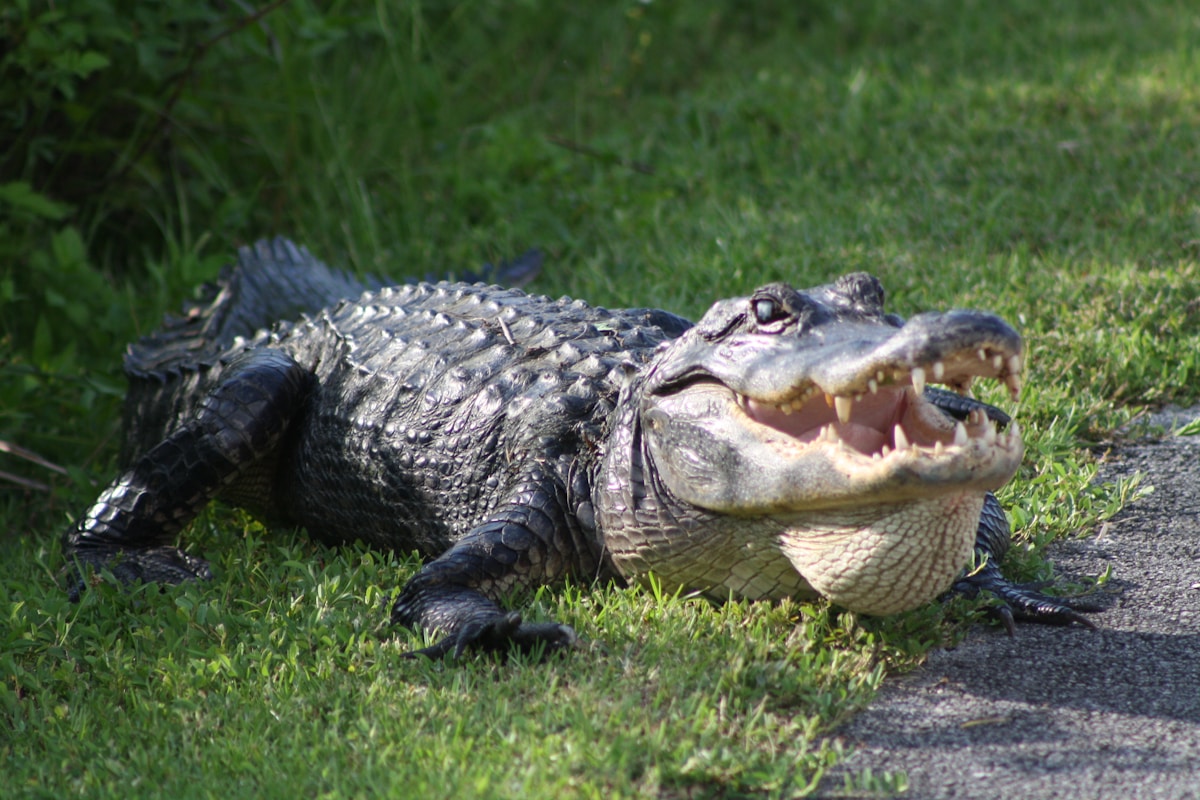
Miami’s day trips split neatly into two categories: the wild south and the curated north. Go south and you hit sawgrass marshes full of alligators, coral reefs, and eventually the string of coral islands stretching to Key West. Go north and you have two of Florida’s most interesting cities - Fort Lauderdale and Palm Beach - both connected by fast rail. The geography is unusual in that almost every compelling option lies on a single axis: south on US-1 toward the Keys, or north on I-95 and Brightline toward the Gold Coast.
For the city itself, see our Miami guide and Things To Do In Miami.
Everglades National Park (40 miles, ~1 hour via SW 8th St / Tamiami Trail)
Everglades National Park’s Ernest Coe Visitor Center (40001 State Road 9336, Homestead; approximately $35 per vehicle for a 7-day pass as of 2026) is the southern entrance - approximately 45 minutes from Brickell. The most accessible trail is the Anhinga Trail (0.8 miles; flat boardwalk; easy), which runs through Taylor Slough and is among the best wildlife-watching walks in Florida. Anhingas (the birds that give it its name) dry their wings on branches directly above you; alligators cruise the water below the boardwalk.
The Pa-hay-okee Overlook (12 miles past the visitor centre) provides a wide panorama across the River of Grass - the sawgrass prairie that defines the Everglades ecosystem. Long Pine Key (6 miles from the entrance) has a network of pine flatwood trails, cooler and shadier than the open marsh.
Airboat tours are not available inside the national park itself (to protect wildlife), but numerous operators run along the Tamiami Trail west of Miami - Coopertown Airboats (22700 SW 8th St; approximately $25–35 per person as of 2026), Everglades Safari Park (approximately $28–33 as of 2026), and others. These give the classic Florida airboat experience through sawgrass and cypress.
Shark Valley (Everglades National Park’s north entrance, approximately 40 miles west on the Tamiami Trail) is the best single stop for alligator density. The flat 15-mile paved loop can be biked (approximately $24 rental as of 2026) or covered by the narrated tram tour (approximately $30 as of 2026) to the 65-foot observation tower at the loop’s midpoint. Alligators genuinely lie beside the path on the asphalt - sometimes blocking it.
Timing: December through April is dry season - water levels are low, wildlife concentrates near water sources, and mosquitoes are manageable. May through November brings rain, heat, and biting insects in quantities that can overwhelm visitors who come unprepared.
Key West (165 miles, ~3.5 hours via US-1 / Overseas Highway)
Key West is a borderline day trip - 3.5 to 4 hours each way on US-1 through 42 islands and 42 bridges leaves approximately 4 hours in town before you need to start the return drive. That said, it is the most iconic drive in Florida, and many people do it.
Hemingway Home and Museum (907 Whitehead St; approximately $18 as of 2026) is the writer’s house from 1931 to 1940, now home to approximately 60 six-toed cats descended from Hemingway’s own polydactyl cats. Guided tours run throughout the day and are worth the hour.
Mallory Square (at the end of Duval Street, on the Gulf side) hosts the nightly Sunset Celebration - street performers, artisans, and the tradition of applauding the sun as it drops into the Gulf of Mexico. Arrive 30–45 minutes before sunset to secure a spot.
Southernmost Point buoy (corner of South and Whitehead St) is technically the southernmost point accessible by car in the continental United States - 90 miles from Cuba. The queues for the selfie are real; go before 9am.
Duval Street runs the full length of the island and is the commercial spine - bars, restaurants, and the famous crawl. For food, the locally loved Blue Heaven (729 Thomas St; approximately $20–35 as of 2026) serves brunch under mango trees where Hemingway once watched boxing matches.
If the drive feels too long, consider the Key West Express fast ferry from Fort Myers (2.5–3.5 hours each way; fares from approximately $100–140 as of 2026) - it crosses the Gulf and deposits you directly in Key West without the Keys traffic. Check schedule at keywestexpress.net. For an organised day trip from Miami by bus, browse Miami tours for guided Keys options.
Fort Lauderdale (30 miles, ~30–40 min via I-95 N or Brightline)
Brightline from MiamiCentral station reaches Fort Lauderdale in approximately 30–40 minutes (fares from approximately $15–30 each way as of 2026) - faster than driving I-95 during peak hours and with no parking to manage. It is the most practical car-free day trip on this list.
Las Olas Boulevard is the main street - broad, palm-lined, with galleries, boutiques, and restaurants running from Flagler Drive east toward the beach. Casanova Pizzeria (726 E Las Olas Blvd; approximately $12–18 per person as of 2026) and Louie Bossi’s (1032 E Las Olas Blvd; approximately $20–35 as of 2026) are the reliable lunch spots.
Water Taxi (all-day pass approximately $40 as of 2026) runs through Fort Lauderdale’s 165 miles of canals, passing superyachts, Intracoastal mansions, and the Riverwalk waterfront. It doubles as transportation and a tour - you can hop on and off at restaurants and bars along the route.
Bonnet House Museum and Gardens (900 N Birch Rd; approximately $20 as of 2026) is a 1920 estate built by artist Frederic Clay Bartlett on 35 acres between the Intracoastal and the Atlantic. The house is an eclectic mix of folk art, mural work, and Bartlett’s own paintings; the grounds include a freshwater lagoon with flamingos and a resident group of squirrel monkeys.
Stranahan House (335 SE 6th Ave; approximately $18 as of 2026) is Fort Lauderdale’s oldest surviving building - an 1901 trading post and home built by the city’s founder, Frank Stranahan. Guided tours cover the house’s history and the Seminole trade that sustained early Fort Lauderdale.
Palm Beach (70 miles, ~1 hour via I-95 N or Brightline)
Brightline from MiamiCentral to West Palm Beach takes approximately 70–80 minutes (fares from approximately $20–40 each way as of 2026) - the most comfortable option if you plan to spend the day walking. Cross the Flagler Memorial Bridge from West Palm Beach to Palm Beach Island (approximately $2 rideshare or walkable in good weather) and the town changes register immediately.
Flagler Museum (1 Whitehall Way; approximately $22 as of 2026) is Henry Flagler’s 1902 mansion - 75 rooms of Gilded Age excess built for his third wife Mary Lily Kenan. The Marble Hall, Grand Hall, and Swiss Billiard Room are the standouts; the museum covers Flagler’s role in building the Florida East Coast Railway that opened the state to tourism. Allow two hours.
Worth Avenue (between South County Rd and Hibiscus Ave) is Florida’s most concentrated luxury shopping street - four blocks of Chanel, Hermès, Gucci, and independent galleries. The arcades between the shops (called “vias”) are worth wandering even if you are not buying.
Norton Museum of Art (1450 S Dixie Hwy, West Palm Beach; approximately $18 as of 2026) holds a serious permanent collection - strong in Chinese art, American Modernism, and a Photography gallery. It is on the West Palm Beach side of the bridge and pairs well with the Flagler on the same day.
The Breakers (1 S County Rd) is worth seeing from outside even if you are not staying - a 1926 Italian Renaissance resort hotel that remains one of the great examples of Florida resort architecture. Walk the ocean terrace; the hotel is open to visitors for meals and afternoon tea in the Circle Dining Room (reservations recommended; approximately $40–80 per person as of 2026).
Search hotels in Miami on Booking.com
Dry Tortugas National Park (ferry from Key West, ~2.5 hours from Key West)
Dry Tortugas National Park is 70 miles west of Key West in the Gulf of Mexico - seven small coral islands built around Fort Jefferson, a massive Civil War-era fortress that was never finished and never fired a shot in battle. It is the most remote national park east of the Mississippi and one of the most extraordinary.
The Yankee Freedom III high-speed catamaran (240 Margaret St, Key West; approximately $220 round-trip per person as of 2026) departs Key West at 8am and returns by 5:30pm - the most practical access. The fare includes snorkelling gear rental and a park ranger narration. The reef around the fort has exceptional visibility (50–100 feet on calm days) and harbours hawksbill and green sea turtles, spotted eagle rays, and dense coral formations.
Fort Jefferson itself is open to walk through - the 16-million-brick hexagonal fortification covers nearly the entire island of Garden Key. Cell 47, where Dr. Samuel Mudd was imprisoned for (falsely, by most accounts) setting John Wilkes Booth’s broken leg after Lincoln’s assassination, is signposted and accessible.
Seaplane access (Key West Seaplanes; approximately $400+ per person one-way as of 2026) cuts the transit to 45 minutes and provides extraordinary aerial views of the fort and reefs from above. Most visitors use the seaplane one-way in and the ferry one-way back, or vice versa.
From Miami, a Dry Tortugas day trip is really a two-day trip - drive to Key West the evening before, ferry out the next morning, and drive back. Plan accordingly. Book the Yankee Freedom ferry well ahead in winter (December–March) when it sells out weeks in advance at dryfortugasferry.com.
Shark Valley and Big Cypress (40 miles, ~1 hour via US-41 W / Tamiami Trail)
Shark Valley (36000 SW 8th St; approximately $35 per vehicle entry fee as of 2026) is the most reliably wildlife-rich stop in the Everglades system. The 15-mile paved loop runs through open sawgrass marsh - flat, straight, and wide - and is the only Everglades road where alligators routinely sit directly on the asphalt.
The tram tour (approximately $30 as of 2026; reservations recommended December–March at recreation.gov) runs a narrated 2-hour loop to the 65-foot observation tower at the halfway point. The tower provides the best single view of the Everglades’ scale - an unbroken sawgrass plain in every direction to the horizon. Bike rentals are approximately $24 for the day.
Big Cypress National Preserve (visitor centre at Oasis Ranger Station, 52105 Tamiami Trail E) begins west of Shark Valley along the same road. The preserve protects 729,000 acres of cypress swamp and is considerably less developed - the Turner River Road (gravel; high-clearance vehicle recommended) and Loop Road (unpaved; 26 miles; low clearance acceptable in dry season) are popular with birders and wildlife photographers.
Wildlife is most active and visible during dry season (December–April). During wet season, the marsh floods and wildlife disperses, making sightings less predictable.
Islamorada, Florida Keys (80 miles, ~1.5 hours via US-1 S)
Islamorada sits at mile marker 80–84 on US-1 and occupies a cluster of six islands - it is the self-described “Sport Fishing Capital of the World” and the most rewarding stop in the Upper Keys for a day trip from Miami.
Robbie’s Marina (77522 Overseas Hwy; approximately $5 per bucket of fish as of 2026) is the most delightful 20 minutes in the Florida Keys: hand-feeding a swarm of tarpon from a wooden dock. The tarpon are large - up to 200 pounds - and aggressive in a way that is thrilling rather than dangerous. Robbie’s also runs snorkel trips, kayak rentals, and fishing charters if you want to extend the visit.
Theater of the Sea (84721 Overseas Hwy; approximately $40 as of 2026) is a marine life attraction established in 1946 - one of the oldest in the US. It houses dolphins, sea lions, stingrays, and sea turtles in natural seawater lagoons. The dolphin interaction programs (additional fee; approximately $150–175 as of 2026) require advance booking. It is more low-key than theme park marine facilities and sits comfortably in the 2–3 hour range.
Coral reef snorkelling trips depart from multiple Islamorada marinas - the reef here is part of the Florida Reef, the only living coral barrier reef in the continental US. Operators including Robbie’s and Holiday Isle Marina run half-day snorkel trips for approximately $45–65 per person as of 2026. The reef is 4–6 miles offshore; visibility averages 20–40 feet.
Hungry Tarpon (at Robbie’s Marina; approximately $15–30 per person as of 2026) serves fish tacos, grouper sandwiches, and conch fritters from a waterfront position with tarpon visibly cruising below the dock. Order the fish dip to start.
Lignumvitae Key Botanical State Park (accessible only by boat; ranger-led tours from Robbie’s, approximately $30 including ferry as of 2026) preserves a rare virgin tropical hardwood hammock - one of the last undisturbed examples left in Florida. The 1919 Matheson House on the island is a Florida Historical Landmark.
Practical Tips
- Dry season (December–April) is Everglades season - wildlife is concentrated, mosquitoes are manageable, and temperatures are comfortable
- Book reef snorkel boats ahead in winter and on weekends - boats cap at 24–30 people and sell out
- Keys traffic on Friday afternoons returning to Miami can be severe - build in extra time or leave by 3pm
- Sun protection on the water is non-negotiable: airboats, snorkel boats, and ferry decks have no shade
- Brightline is the fastest and most stress-free way to reach Fort Lauderdale and Palm Beach - buy tickets at gobrightline.com
- Dry Tortugas: book the Yankee Freedom ferry at dryfortugasferry.com at least 2–4 weeks ahead in peak season
- Prices as of 2026 - confirm at nps.gov, recreation.gov, gobrightline.com, and individual venue sites before travelling
For organised excursions, browse Miami-area tours for Everglades, reef, and Keys day trips with guide and transport included. For the Florida Keys, the Dry Tortugas, or Lake Okeechobee, a rental car gives you the flexibility that rail cannot.