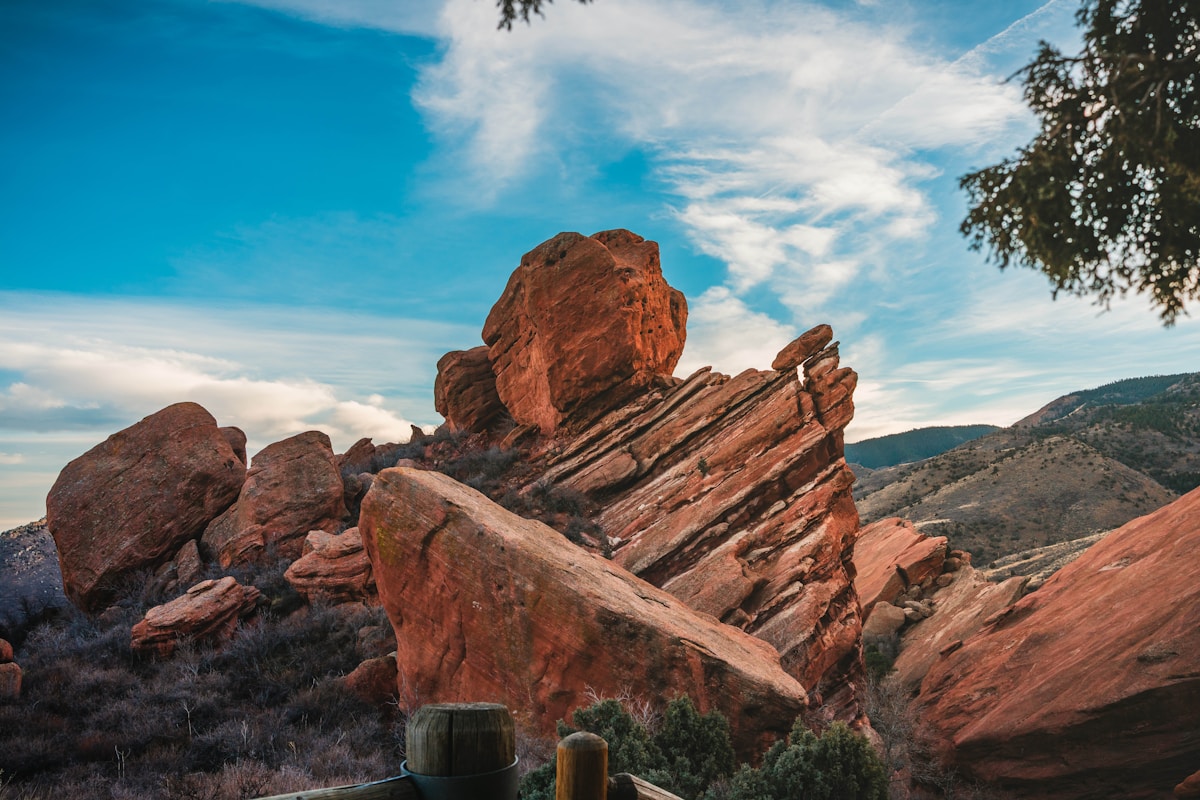
Denver’s position at the base of the Front Range makes it the closest major city in the US to high-altitude mountain terrain - Rocky Mountain National Park, three major ski resort towns, and multiple 14,000-foot peaks are all within 2 hours. Interstate 70 west from Denver is the access road for most mountain destinations and can be severely congested on Friday evenings and Sunday afternoons in summer and ski season; plan accordingly.
Search hotels in Denver on Booking.com
Most day trips from Denver require a car - compare car hire rates before you go. For ideas on what to do in the city, see our Denver things to do guide.
Rocky Mountain National Park - 1 hour 30 minutes northwest
Rocky Mountain National Park is Colorado’s most-visited national park and one of the most accessible high-alpine environments in the country, with more than 300 miles of trails and 60 peaks above 12,000 feet. Entry is approximately $35 per vehicle for a 7-day pass as of 2026.
Important: Timed entry permits are required from late May through mid-October. The park operates two permit systems - one for the Bear Lake Corridor (required 5am–6pm) and one for the rest of the park (required 9am–3pm). Book through recreation.gov; they typically sell out weeks in advance for summer weekends.
The Bear Lake trail system is the most popular section. The Bear Lake Loop (0.5 miles, paved, accessible) connects to longer trails including Emerald Lake (3.6 miles round-trip, gaining 605 feet) and Sky Pond (8.6 miles round-trip, gaining 1,780 feet). All begin from the Bear Lake trailhead.
Trail Ridge Road is the single most impressive driving experience in Colorado - a 48-mile road that climbs to 12,183 feet, the highest paved continuous road in the United States. The tundra section above tree line covers about 11 miles. Watch for elk, marmots, and pika along the road. The road typically opens in late May and closes in mid-October.
Estes Park, the gateway town just east of the park entrance, has the iconic Stanley Hotel (built 1909, Stephen King’s inspiration for The Shining), elk that routinely walk through town, and a commercial strip of restaurants and shops. Dinner in Estes Park is a reasonable way to avoid peak-hour I-25 traffic on the return.
Book Rocky Mountain National Park tours
Colorado Springs - 1 hour south
Colorado Springs sits at 6,035 feet at the foot of Pikes Peak - at 14,115 feet, the most-visited 14er in Colorado and the second most-visited mountain in the world after Mount Fuji.
Garden of the Gods is the most photogenic stop and entirely free - 300-foot sandstone formations in vivid red and white against the green backdrop of the Front Range. The Central Garden Trail (1.5 miles, paved) loops through the main formation cluster. The park visitor center has free parking and exhibits on the geology.
The Broadmoor Manitou and Pikes Peak Cog Railway operates from downtown Manitou Springs, taking approximately 1 hour 15 minutes to reach the 14,115-foot summit. Tickets run approximately $16 per person as of 2026 and reservations are strongly recommended. The alternative is the Pikes Peak Highway (toll approximately $15 per vehicle), which allows you to drive to the summit and stop at viewpoints along the way.
Cheyenne Mountain Zoo is built into the mountain at 6,800 feet - entry approximately $26 as of 2026 - with giraffes, elephants, and a monorail ride over the African savanna section. It is a legitimately excellent zoo and consistently rated among the best in the US.
The Broadmoor Resort hotel complex (built 1918) has restaurants open to non-guests and grounds worth walking; the Penrose Room has views over the lake. For lunch, downtown Colorado Springs has a growing restaurant scene along Tejon Street with options from approximately $15–$30/person.
Breckenridge - 1 hour 30 minutes west
Breckenridge sits at 9,600 feet on the western side of the Continental Divide, reached via I-70 west and CO-9 south from Frisco. The drive over Vail Pass (10,666 feet) on I-70 is scenic and generally reliable except in winter storms.
Main Street in Breckenridge is a well-preserved gold rush commercial strip from the 1880s and 1890s - the town became a National Historic District in 1980 and has maintained the integrity of its Victorian architecture better than most Colorado mining towns. The Summit Historical Society runs walking tours of the historic district (approximately $15 as of 2026).
In summer, the Breckenridge Ski Resort operates the BreckConnect Gondola for approximately $30 as of 2026, giving access to trails and mountain biking at elevation. The Colorado SuperChair lift extends hiking access to 12,998 feet. Trails around town are accessible without paying - the Burro Trail from town is a moderate hike to timberline.
Carter Park on the east side of town has picnic areas, a disc golf course, and tennis courts. The town has excellent restaurants along Main Street - Kenosha Steakhouse and Hearthstone both serve Colorado-focused menus with dinner entrées from approximately $30–$55 as of 2026.
Vail - 2 hours west
Vail is the most polished of Colorado’s resort towns and has invested heavily in summer programming as ski revenue alone cannot sustain the infrastructure year-round. The drive west on I-70 through the Eisenhower Tunnel (11,013 feet) and Vail Pass is one of Colorado’s great mountain highway experiences.
Betty Ford Alpine Gardens in the center of Vail Village are the highest public botanical gardens in the United States at 8,200 feet - entirely free and covering 4 acres with 2,500 plant species from alpine regions worldwide. The gardens are open daily in summer and are exceptional in July and August at peak bloom.
The Eagle Bahn Gondola from Lionshead village runs in summer for approximately $35 as of 2026, accessing the upper mountain hiking network at 11,570 feet. The Game Creek Trail (8 miles round-trip from the gondola top station) crosses into a bowl rarely reached by casual visitors.
Vail Village itself is car-free and walkable - the pedestrian-only core has upscale shopping and dining around a central square that resembles an Austrian ski resort village. Lunch at Mountain Standard or Almresi runs approximately $20–$40 per person as of 2026.
Idaho Springs - 45 minutes west
Idaho Springs is the closest mountain town to Denver on I-70 and the most accessible introduction to Colorado’s mining history. The town itself sits in a narrow canyon at 7,526 feet with a compact Main Street that has resisted being entirely consumed by tourism.
The Argo Gold Mine and Mill tour (approximately $25 as of 2026) runs through the historic mine complex that processed more than $100 million in gold during its operating years. The tour includes the Double Eagle gold mine, the Argo Mill, and a gold panning demonstration. It is a genuine industrial heritage site rather than a theatrical recreation.
Clear Creek through Idaho Springs has Class III–IV whitewater that attracts rafting outfitters. Half-day rafting trips from local operators run approximately $50–$75 per person as of 2026 - a reasonable option combined with lunch in town.
Beau Jo’s Pizza on Miner Street is a Colorado institution specializing in mountain pies with thick, braided honey wheat crust - approximately $15–$25 per person as of 2026. The original Idaho Springs location opened in 1973.
The Argo Falls overlook (free) at the east end of town has a short trail to a scenic waterfall above Clear Creek.
Great Sand Dunes National Park - 4 hours south
The Great Sand Dunes are the tallest in North America at 750 feet, rising from the flat San Luis Valley floor with the Sangre de Cristo Mountains as a backdrop. Entry is approximately $25 per vehicle as of 2026.
The dunes are geologically unusual - sand carried by the Rio Grande was deposited by winds, then stabilized by opposing creek flows and vegetation at the edges. Medano Creek flows at the base of the dune field in spring and early summer (typically April through June), creating a shallow wading area with a seasonal “surge flow” phenomenon where waves move through the sand-laden water.
Hiking the dunes is sandboarding or sled-friendly (boards available to rent from outfitters in the town of Mosca, approximately $30/day as of 2026). There are no marked trails on the dunes - navigation is by sight. The ascent to the top of the High Dune (699 feet) takes 1–2 hours depending on pace and sand conditions; early morning or late afternoon avoids peak heat.
The drive from Denver via I-25 and US-160 passes through Pueblo and Alamosa - Alamosa has good restaurants and is 30 minutes from the dunes if you need a lunch stop.
Steamboat Springs - 3 hours northwest
Steamboat Springs has a more working-ranching character than most Colorado ski towns - it bills itself as Ski Town USA for producing more winter Olympians per capita than any other American city. The drive northwest via US-40 over Rabbit Ears Pass (9,426 feet) is one of the least-congested scenic routes out of Denver.
Strawberry Park Hot Springs outside Steamboat (approximately $20/person as of 2026, reservations recommended on weekends) is a series of natural spring pools in a forest canyon at 7,000 feet. The springs are clothing-optional after dark - daytime visits are family-friendly.
Fish Creek Falls (free, 4.5 miles north of town) drops 283 feet in two tiers and has a short trail (0.5 miles to the lower falls viewpoint) and a longer route (4 miles round-trip to the upper falls). The lower falls is one of the more impressive accessible waterfalls in Colorado.
The Steamboat ski area operates limited summer lift service; the Christie Peak Express runs for approximately $25 as of 2026 with access to mountain biking and hiking trails. Downtown Steamboat has an active western rodeo scene in summer - the Steamboat Pro Rodeo Series runs Friday and Saturday nights in summer with tickets approximately $15 as of 2026.
Georgetown - 45 minutes west
Georgetown is the best-preserved silver mining town in Colorado - a National Historic Landmark District with more than 200 buildings from the 1860s–1890s still standing. It is worth stopping even briefly on the way to or from other destinations on I-70.
The Georgetown Loop Railroad (approximately $30 as of 2026) runs a narrow-gauge steam train between Georgetown and Silver Plume on a 3-mile route that crosses the Devil’s Gate High Bridge - an engineering marvel at 96 feet high, built to gain elevation across a tight canyon. The trip takes about 1 hour round-trip.
The Hamill House Museum (entry approximately $8 as of 2026) was built in 1867 and expanded by silver magnate William Hamill into a Gothic cottage with original furnishings and wallpaper. It is one of the most intact Victorian interiors in Colorado.
Georgetown itself has several excellent mountain restaurants along 6th Street - the Lucha Cantina serves Colorado Mexican food (approximately $12–$20/person as of 2026) in a historic building adjacent to the train depot.
For more Colorado accommodation options when staying overnight, see our Denver hotels guide.