Baltimore sits at the northern edge of the Chesapeake Bay, which places it within easy reach of colonial capitals, Civil War battlefields, mountain national parks, and Atlantic beaches. Few mid-Atlantic cities pack this much variety within a two-hour radius.
For the city itself, see our Things To Do In Baltimore guide.
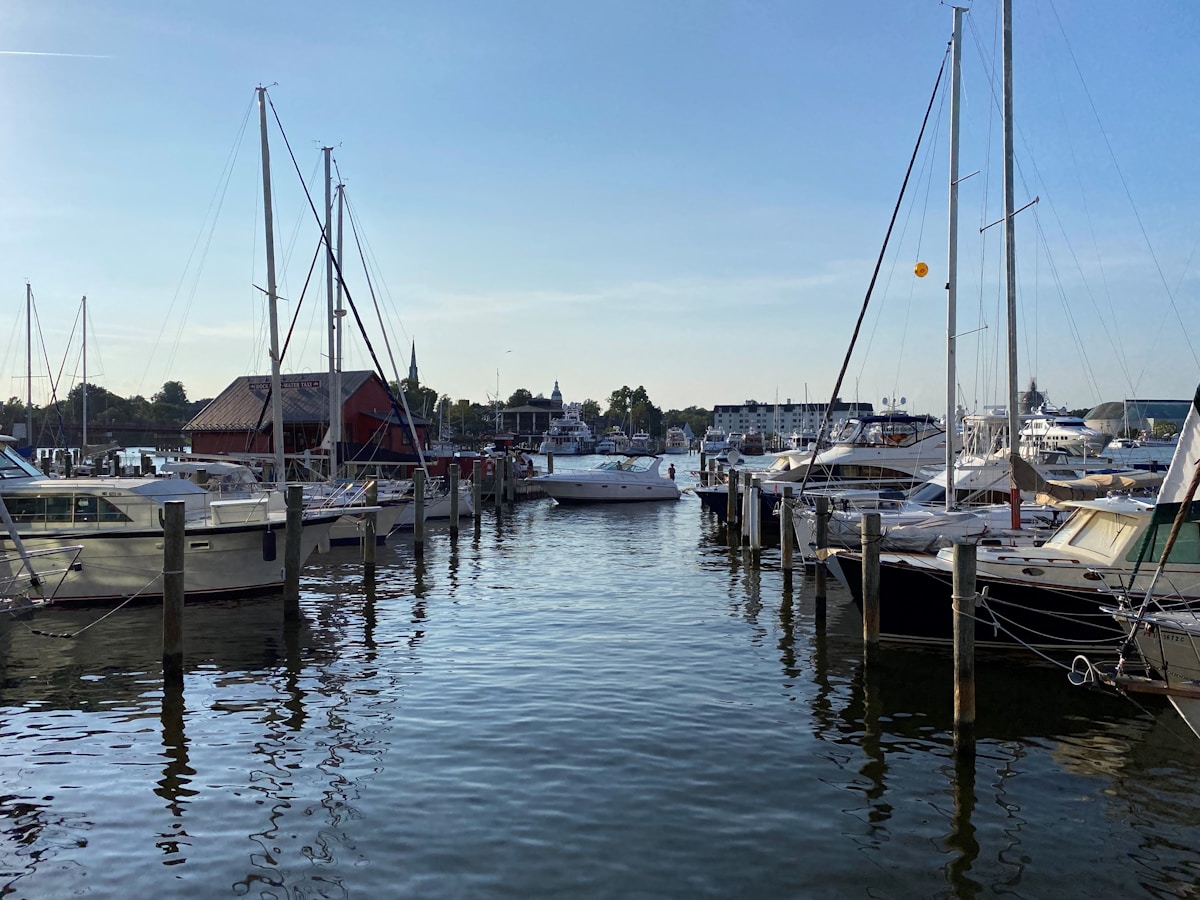
Annapolis - 30 minutes south
Annapolis is 30 miles southeast via US-50, typically 35–45 minutes depending on traffic, and one of the most rewarding day trips in the mid-Atlantic. The Maryland State Capitol (State Circle; free tours) was completed in 1779 and is the oldest US state house still in continuous legislative use - it’s where Congress ratified the Treaty of Paris in 1784 and George Washington resigned his commission. Tour guides are present most days; confirm hours at msa.maryland.gov.
US Naval Academy (52 King George St; approximately $14 adults for museum and grounds as of 2026) occupies a walled campus on the Severn River. The Armel-Leftwich Visitor Center covers naval history and Bancroft Hall, the largest dormitory building in the world. The Noon Formation parade is open to visitors on weekday training days - worth timing your arrival around it.
City Dock (Dock St) has been a working waterfront since the 1650s and now hosts sailing charters and oyster boat tours (approximately $35–55 as of 2026). For lunch, Chick and Ruth’s Delly (165 Main St; sandwiches approximately $12–16 as of 2026) has been a Naval Academy-adjacent institution since 1965. Middleton Tavern (2 Market Space; entrées approximately $18–28 as of 2026) on the waterfront is the other reliable option.
Annapolis parking fills by 10am on weekends. Use the Navy-Marine Corps Memorial Stadium garage and catch the free shuttle into the Historic District - it saves the aggravation.
Washington DC - 1 hour south (or 40 minutes by MARC train)
The capital is close enough to be a half-day trip, and the train makes it genuinely effortless. MARC Penn Line runs from Baltimore Penn Station to Washington Union Station roughly every 30–60 minutes (approximately $9 each way as of 2026 - check mta.maryland.gov for schedules). Amtrak Regional also covers the route in under an hour.
The Smithsonian Institution’s 19 museums on and near the National Mall are all free. The National Museum of African American History and Culture (1400 Constitution Ave NW; free, timed-entry passes required - book at si.edu) remains the most in-demand; reserve passes weeks ahead in summer. The National Air and Space Museum (6th and Independence SW) and National Museum of Natural History (10th and Constitution NW) can be covered in a morning between them.
The National Mall is a 2-mile corridor from the Lincoln Memorial to the Capitol. The Vietnam Veterans Memorial (5 Henry Bacon Drive NW) and Martin Luther King Jr. Memorial (1964 Independence Ave SW) are both quietly affecting. Georgetown (M Street NW, reachable via DC Circulator bus from Union Station) has the C&O Canal towpath and better independent dining than the Mall area. Martin’s Tavern (1264 Wisconsin Ave NW; entrées approximately $20–30 as of 2026) has been serving Georgetown since 1933 - JFK proposed to Jackie at Booth 3.
Gettysburg, PA - 1.5 hours northwest
Gettysburg is one of the most important historical sites in the country, and the battlefield’s scale makes it genuinely immersive. Gettysburg National Military Park (1195 Baltimore Pike; park free, museum approximately $17 adults as of 2026 for the film and cyclorama) covers 6,000 acres of south-central Pennsylvania farmland where 51,000 soldiers were killed or wounded over three days in July 1863.
The Auto Tour route (18 miles, 16 stops) covers the full three-day battle with numbered audio tour stops available at the visitor center. Little Round Top (Sykes Ave) provides the best view of the southern battlefield - this is where Colonel Joshua Chamberlain and the 20th Maine held the Union left flank on July 2. Devil’s Den immediately below was a boulder field used by Confederate sharpshooters.
The Dobbin House Tavern (89 Steinwehr Ave; entrées approximately $20–30 as of 2026) has been operating since 1776 - the oldest surviving building in Gettysburg. Licensed battlefield guides (approximately $80 for a 2-hour vehicle tour as of 2026) are bookable at the visitor center and transform the auto tour from a driving route into a coherent narrative. The battlefield is better in spring and autumn when visibility is clear across the fields.
Harpers Ferry, WV - 1.5 hours west
Harpers Ferry sits at the confluence of the Shenandoah and Potomac Rivers where Maryland, Virginia, and West Virginia all meet - the geography alone makes it worth the drive. Harpers Ferry National Historical Park (Shenandoah St; approximately $20/vehicle as of 2026) preserves the lower town where John Brown’s 1859 raid on the federal arsenal accelerated the events leading to the Civil War. John Brown’s Fort (High St) - the fire engine house where Brown made his last stand before capture - is the park’s central structure.
Maryland Heights Trail (4 miles round trip, approximately 1,000 feet elevation gain) rises steeply above the confluence to a stone fort and dramatic views down both river valleys - among the best moderate hikes within two hours of Baltimore. The Appalachian Trail passes through town; the lower town is accessible on foot from the Harpers Ferry Amtrak station on the Washington–Pittsburgh route (check Amtrak.com for schedules). The Anvil (1290 Washington St; entrées approximately $18–28 as of 2026) is the practical dinner stop on the way back.
Find guided Harpers Ferry tours and day excursions from Baltimore
Shenandoah National Park - 2 hours west
Shenandoah’s north entrance at Front Royal is approximately 100 miles from Baltimore via I-270 S and US-340 - around 2 hours. A 7-day vehicle pass costs approximately $35 as of 2026 (verify at nps.gov/shen). Skyline Drive runs 105 miles along the Blue Ridge crest through the park; even the first 20 miles from the north entrance justify the trip.
Stony Man Trail (1.6 miles round trip from Mile 41.7) is the shortest route to Shenandoah’s second-highest peak, with exposed quartzite cliffs and views west into the Page Valley. Dark Hollow Falls Trail (1.4 miles round trip from Mile 50.7) descends to a 70-foot waterfall - the most popular short hike in the park, and understandably so. Bearfence Mountain Loop (1.2 miles, scramble required) near Mile 56 has the best 360-degree summit views in the park.
Skyland Resort (Mile 41.7; dining room open for lunch and dinner seasonally) is the most convenient food stop in the northern section - reserve a table in advance on summer weekends. Wildlife is active throughout: black bears, white-tailed deer, and wild turkeys are common sightings along Skyline Drive, particularly at dawn and dusk. Arrive before 9am in summer - the entrance station queues and popular trailhead lots fill by mid-morning.
Search hotels in Baltimore on Booking.com
Delaware Beaches - 1.5 hours east
The Delaware coast offers a quieter, less-commercial alternative to Ocean City. Rehoboth Beach (120 miles via US-50 E and DE-1 N) is the most popular town - a manageable boardwalk, independent restaurants, and the nearby Cape Henlopen State Park (42 Cape Henlopen Drive, Lewes; approximately $10/vehicle as of 2026). The park’s Gordons Pond Trail (3 miles) runs through dune habitat to the Atlantic; the Seaside Nature Center covers Delaware coastal ecology.
Lewes (5 miles north of Rehoboth) is the older, quieter alternative - a small historic downtown on the Delaware Bay with ferry connections to Cape May, NJ (approximately $55–70/vehicle as of 2026 via Cape May-Lewes Ferry; check cmlf.com for schedules). Dogfish Head Brewery (320 Rehoboth Ave, Rehoboth; brewery tours approximately $10 as of 2026) is the anchor craft beer destination in the state. The Cultured Pearl (301 Rehoboth Ave; sushi approximately $15–22/roll as of 2026) is the consistently recommended independent dinner option in Rehoboth. Delaware charges no sales tax - outlets at Tanger Outlets Rehoboth Beach (36470 Seaside Outlet Drive) add a practical dimension to the trip if shopping is on the agenda.
Chesapeake & Ohio Canal - 1 hour west
The C&O Canal National Historical Park (approximately $20/vehicle at Great Falls; towpath access is free elsewhere) preserves 184.5 miles of canal towpath from Washington DC to Cumberland, MD. The Great Falls section (11710 MacArthur Blvd, Potomac, MD; the most dramatic and most visited section) is approximately 50 miles from Baltimore via I-270 S - around 1 hour.
Great Falls Tavern Visitor Center (Mile 14.3) has canal history exhibits and overlooks the gorge where the Potomac drops 76 feet over 0.75 miles of rapids - genuinely impressive. The Billy Goat Trail (3.5 miles from the visitor center) runs along the gorge rim with exposed rock sections and Potomac views throughout. The flat towpath itself is ideal for walking, running, or cycling - C&O Canal Bicycles in Hancock, MD rents bikes if you want a longer section.
Old Angler’s Inn (10801 MacArthur Blvd, Potomac; entrées approximately $28–40 as of 2026) near the trailhead is an 1860 inn with a reliable kitchen - upscale but not out of place after a day on the trail. The canal towpath is free to access on foot or bicycle at every road crossing along its 184-mile length; the vehicle entry fee applies only at Great Falls and a handful of other developed areas.
Rent a car for the western day trips from Baltimore
Practical Tips
- MARC Penn Line to Washington DC takes approximately 40 minutes and costs approximately $9 each way as of 2026 - the most efficient way to do a DC day trip
- Annapolis weekend parking fills early; use the Navy-Marine Corps Memorial Stadium garage and the free shuttle
- Gettysburg and Harpers Ferry are better in spring and autumn - summer heat is significant on exposed battlefield terrain
- Shenandoah is busiest in October for fall foliage; arrive by 8am on peak weekends to secure trailhead parking
- Delaware Beaches in summer see heavy US-1 traffic; midweek trips avoid the worst of it
- All prices as of 2026 - verify current entry fees, ferry schedules, and transit fares before visiting