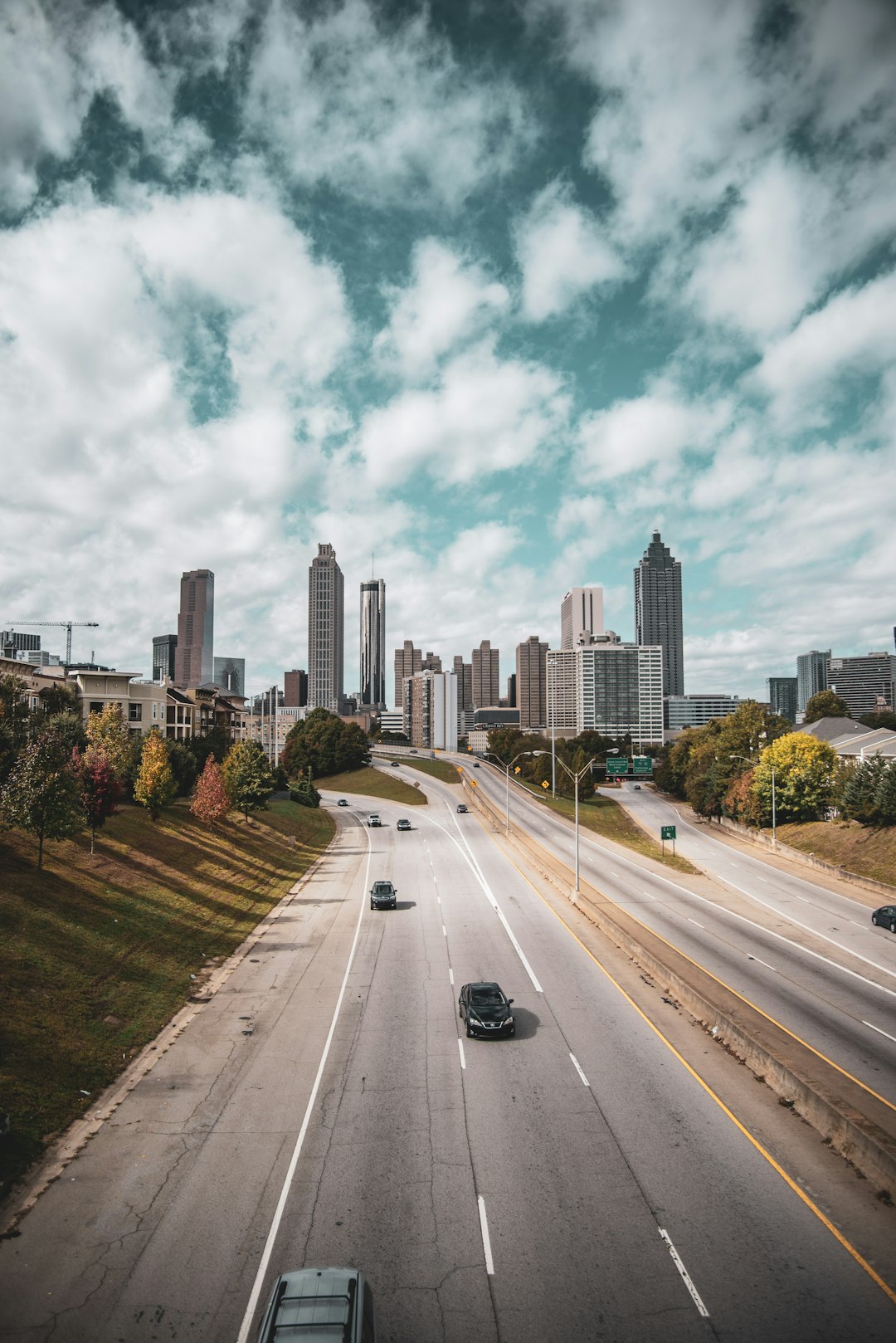
Atlanta sits at the crossroads of the Deep South and the Southern Appalachians, which means the day-trip range is unusually varied - Civil War battlefields, mountain rivers, gold rush towns, antique-railroad rides, and one of the South’s most atmospheric cities are all within a few hours’ drive. For what to do in the city itself, see our Atlanta things to do guide.
Compare car hire rates before setting out - most of these destinations sit well off any transit line, and having your own wheels opens up the mountain back roads considerably.
Stone Mountain Park - 30 minutes east
Stone Mountain is the obvious first choice for an Atlanta day trip - close, family-friendly, and covering more ground than most visitors expect. The park’s centrepiece is the Confederate Memorial Carving, the largest bas-relief sculpture in the world at 90 feet tall and 190 feet wide, depicting Robert E. Lee, Stonewall Jackson, and Jefferson Davis on horseback. The history of the carving (begun in 1916, restarted twice, completed in 1972) is as interesting as the carving itself.
Vehicle entry to the park is approximately $30 as of 2026 - a flat rate that covers nearly all attractions. The Summit Skyride cable car rises 825 feet to the top of the 1,686-foot granite dome; the 360-degree view from the summit takes in Atlanta’s skyline 16 miles to the west and the northern Georgia ridgeline beyond. The Walk-Up Trail (1.3 miles, strenuous) is a popular alternative to the cable car - granite underfoot most of the way, with chains to grab near the top.
The Laser Show Spectacular, running Friday through Sunday evenings from late spring through early autumn, projects animated sequences onto the carving face with a live soundtrack. It draws large crowds - arrive by 8pm for the show, bring a blanket for the lawn seating. Stone Mountain Village, the small town at the park’s eastern entrance, has independent restaurants and antique shops worth a look before or after the park.
Book Atlanta tours and excursions
Kennesaw Mountain National Battlefield - 30 minutes northwest
Kennesaw Mountain is one of the most accessible Civil War sites in the Southeast and entirely free to enter. In June 1864, General Sherman’s Union forces attempted to break through Confederate lines held by General Joseph Johnston on these ridges during the Atlanta Campaign - they failed here, costing roughly 3,000 Union casualties in a single morning before Sherman reverted to flanking tactics.
The Visitor Center on Stilesboro Road has exhibits explaining the Atlanta Campaign in full context and is the starting point for the Kennesaw Mountain Trail (approximately 2.3 miles round-trip to the summit, moderate). The summit offers clear views east toward Marietta and southwest toward Atlanta. The Cheatham Hill Loop (approximately 5 miles) passes the Illinois Monument and the site of the “Dead Angle,” where the heaviest fighting occurred.
No entry fee, no ticket required - just a parking fee of approximately $3 as of 2026 at the visitor center lot. The trails are open sunrise to sunset year-round. Summer mornings before 9am are considerably cooler than midday; the exposed ridgeline trails get hot between June and August.
Marietta Square, 3 miles east of the battlefield, makes a logical lunch stop - the Marietta Diner on Whitlock Avenue serves Southern breakfast plates and sandwiches, with entrées approximately $12–$18 as of 2026.
Chattanooga, Tennessee - 2 hours north
Chattanooga sits in a bend of the Tennessee River at the southern edge of the Cumberland Plateau, and it has reinvented itself over the past 20 years into one of the most interesting small cities in the South. The Tennessee Aquarium on Ross’s Landing is the anchor attraction - two separate buildings cover freshwater river ecosystems and ocean environments, with entry approximately $40 per adult as of 2026. The river building’s alligator snapping turtles and paddlefish are among the most striking exhibits; the ocean building’s jelly gallery and touch pools are better suited to children.
Lookout Mountain rises 2,200 feet above the city just southwest of downtown. The Incline Railway (entry approximately $16 round-trip as of 2026) claims to be the world’s steepest passenger railway - the final section runs at a 72.7% grade, which is genuinely alarming. At the top, Point Park (entry approximately $5 as of 2026) marks the site of the Civil War “Battle Above the Clouds” from November 1863. Rock City, also on the Lookout Mountain summit, charges approximately $25 as of 2026 and routes visitors through a 4,100-foot trail through sandstone formations with “See 7 States” views on clear days.
The Walnut Street Bridge, completed in 1891 and now the world’s longest pedestrian bridge over water, crosses the Tennessee at 2,370 feet - the views upriver toward the Highland Park neighbourhood are worth the 10-minute walk. Bluewater Grille on Broad Street serves wood-fired fish and riverfront views; dinner entrées run approximately $22–$38 as of 2026.
Book Chattanooga tours and experiences
Blue Ridge, Georgia - 1.5 hours north
Blue Ridge is a small mountain town at the end of a state highway with enough to fill a full day without ever feeling crowded. The Blue Ridge Scenic Railway runs from the restored 1905 depot in town through the Toccoa River valley and back - a 26-mile round trip through old-growth hardwood forest, with no driving required once you’re aboard. Adult tickets run approximately $29–$35 as of 2026 depending on seat class; the open-air cars are the better choice in good weather.
The Toccoa River runs cold and clear through the mountains northwest of Blue Ridge, and several outfitters run tubing trips from early summer through early autumn. Blue Ridge Canopy Tours and Toccoa River Adventures both offer trips with shuttle service; tubing rates are approximately $20–$25 per person as of 2026. The river section between Deep Hole and Sandy Bottoms is particularly good - approximately 3 hours on the water with one Class I rapid.
Blue Ridge’s small downtown on East Main Street has grown considerably with wine shops, galleries, and farm-to-table restaurants. Harvest on Main is the most consistently recommended spot, with Appalachian-influenced small plates and local trout; dinner entrées run approximately $24–$42 as of 2026. Book ahead on weekends - it fills quickly.
The mountain roads in and around Blue Ridge are genuinely scenic: the drive up GA-60 through Suches and around Lake Blue Ridge adds 20 minutes but rewards with views that the direct US-76 route doesn’t.
Amicalola Falls State Park - 1.5 hours north
Amicalola Falls is technically nine separate cascades stacked 729 feet down a granite face in Dawson County - that total drop makes it the tallest waterfall east of the Mississippi. The Falls Viewing Trail (1.6 miles round-trip) climbs stone steps alongside the cascades to the top, where a footbridge crosses the flow. The hike is strenuous but short; the views from the bridge are excellent in all seasons but peak during spring (wildflowers) and mid-October (hardwood foliage).
State park parking costs approximately $5 per vehicle as of 2026 - one of the best-value state parks in Georgia. The Amicalola Falls Lodge and Spa sits at the top of the falls and is the most dramatic accommodation option in north Georgia if you want to stay over. Day visitors can eat at the lodge restaurant without a reservation.
Search hotels in Atlanta on Booking.com
Amicalola is also the western terminus approach for the Appalachian Trail - the 8.5-mile approach trail from the park lodge connects to the AT’s southern terminus at Springer Mountain. Most day visitors don’t make this hike (the full approach is 16 miles round-trip), but the first 2 miles of the approach trail are a pleasant walk through mixed hardwood forest without the full commitment.
Spring and autumn are ideal visiting seasons. Summer weekends between 10am and 2pm get crowded at the viewing platforms - arriving before 9am in summer makes a noticeable difference.
Callaway Gardens - 1.5 hours southwest
Callaway Gardens covers 2,500 acres in Pine Mountain, Georgia, roughly midway between Atlanta and Columbus. It was developed as a private retreat by textile magnate Cason Callaway starting in the 1930s and opened to the public in 1952. Entry is approximately $25 per adult as of 2026 and covers the full grounds.
The Day Butterfly Center is the primary draw - a 4-acre indoor tropical conservatory with up to 1,000 free-flying butterflies representing roughly 50 species. The mix changes seasonally; June and July bring the highest species count. Children and photographers both do well here. The center opens at 9am and is busiest from 11am–2pm.
Robin Lake Beach, a 13-acre man-made freshwater beach, is open to guests during summer and is the main family attraction on warm days. The Ida Cason Callaway Memorial Chapel, built in 1962 on a small peninsula in Falls Creek, is an example of small-scale stone chapel architecture worth seeing even without religious interest.
The Lodge and Spa at Callaway is the on-site accommodation option. The resort’s dining room runs approximately $30–$55 per entrée as of 2026 - the grounds justify the premium if you’re staying the night.
The Fantasy in Lights holiday event in November and December transforms the gardens after dark with elaborate light installations along a 5-mile driving trail. It runs from mid-November through early January and requires separate timed-entry tickets, approximately $30–$40 per vehicle as of 2026.
Dahlonega, Georgia - 1.5 hours north
Dahlonega was the site of the first major gold rush in United States history - beginning in 1828, nearly 20 years before the California rush. The Dahlonega Gold Museum Historic Site, housed in the 1836 Lumpkin County courthouse on the town square, explains the full history of the rush, the Georgia mint that operated here from 1838 to 1861, and the eventual Cherokee removal connected to the gold discovery. Entry is approximately $6 as of 2026 - one of the better value historic sites in Georgia.
The town square is compact and well-preserved, with independent galleries, a Saturday farmers market (year-round, 8am–noon), and several restaurants built into the 19th-century storefronts. Spirits Tavern on the square serves elevated pub food; lunch plates run approximately $14–$20 as of 2026.
Dahlonega sits at the southern edge of the North Georgia wine country - approximately a dozen wineries operate within 20 minutes of town. Montaluce Winery on Cavender Creek Road is the most polished operation, with a hilltop tasting room and vineyard views; tastings run approximately $15–$20 per person as of 2026. Wolf Mountain Vineyards focuses on estate reds and has received more critical recognition; their Sunday brunch ($50–$65 per person as of 2026) books out weeks in advance.
Dahlonega is also the southern gateway to the Appalachian Trail’s Georgia section - the trailhead at Woody Gap (25 minutes north on US-19) is a popular access point for day hikes on Blood Mountain, the highest AT peak in Georgia at 4,458 feet.
Book tours and experiences around north Georgia
Savannah, Georgia - 4 hours southeast
Savannah is the longest haul on this list but rewards the drive with one of the most architecturally intact historic cities in the South. The Historic District’s 22 public squares - laid out by James Oglethorpe’s 1733 city plan - give the city its characteristic rhythm: oak-shaded parks surrounded by Federal, Regency, and Victorian townhouses. Forsyth Park (30 acres, free) is the largest and most photogenic, particularly around the 1858 cast-iron fountain.
River Street, the nine-block cobblestone waterfront along the Savannah River, runs beside a bluff that separates it from the main historic grid. The Cotton Exchange building and the old cotton warehouses along the Factors Walk now hold restaurants, galleries, and shops. The Olde Pink House on Reynolds Square, dating to 1771, is the oldest house in Savannah and now operates as a restaurant; dinner entrées run approximately $28–$46 as of 2026 and the bar serves one of the South’s better frozen gin punch drinks.
Bonaventure Cemetery, 4 miles east of the historic district, is a Victorian landscape cemetery established in 1846 - Spanish moss-draped live oaks, elaborate marble monuments, and the graves of songwriter Johnny Mercer and poet Conrad Aiken. It operates as an active cemetery and is free to visit; the most atmospheric section is along Bonaventure Road near the back. The Savannah Visitor Center (free, on MLK Jr Boulevard) provides printed walking maps of the squares and cemetery routes.
Savannah’s food scene centres on the historic district. Mrs. Wilkes Dining Room on Jones Street serves communal Southern plates (fried chicken, collards, black-eyed peas) for approximately $25 per person as of 2026 - arrive before 11am to avoid queuing more than 30 minutes.
Book Savannah walking tours and excursions