Best Day Trips from Salt Lake City: Arches, Canyonlands and Park City
Book an experience
Things to do here
The top-rated tours and activities here — all with instant confirmation and free cancellation on most bookings.
Contents
- Park City — mountain town, all seasons
- Antelope Island State Park — bison on the Salt Lake
- Moab and Arches National Park — the long day trip
- Bonneville Salt Flats — the white nothing
- Timpanogos Cave National Monument — the mountain cave
- Zion National Park — the long-weekend borderline
- Practical tips
- More Salt Lake City Guides
Salt Lake City is one of the best-positioned US cities for day trips with any kind of outdoor focus. Five national parks are within a half-day drive, ski resorts are 30 miles from downtown, and the Great Salt Lake and its island are closer still. The trade-off is that the serious destinations — Moab, Capitol Reef, Zion — are genuinely long drives. The day-trip calculus here favours early starts.
For the city itself, see our Salt Lake City travel guide and Things To Do In Salt Lake City.
Park City — mountain town, all seasons
Approximately 30 miles east of downtown via I-80 East through Parley’s Canyon (around 35–45 minutes by car), Park City functions as Salt Lake’s mountain escape in both winter and summer. In winter: Park City Mountain Resort and Deer Valley Resort are both lift-accessible from the town — single-day lift tickets approximately $180–220 as of 2026, though buying in advance or via ski pass (IKON, Epic) cuts this significantly. Utah Olympic Park, approximately 5 miles north of Main Street (admission approximately $5; specific activities extra), is open year-round and runs bobsled rides and Nordic ski jumping demos in winter, zip lines and coasters in summer. In summer: mountain biking trails on the slopes, hiking through Wasatch terrain, and Main Street’s good restaurants and galleries without the ski crowd prices. The Park City Museum (approximately $12 per adult as of 2026) on Main Street covers the mining boomtown history that preceded the ski era. UTA’s express ski buses run in winter from the SLC transit hub (approximately $5 each way as of 2026 — far cheaper than parking at the resorts).
Antelope Island State Park — bison on the Salt Lake
Approximately 45 minutes northwest of downtown via I-15 North and the causeway from Syracuse (vehicle fee approximately $15 as of 2026), Antelope Island is the largest island in the Great Salt Lake and one of the most unusual ecosystems in the American West. A herd of approximately 700–900 bison roams the island freely — you will almost certainly see them from the road or the Buffalo Point overlook. Pronghorn antelope (from which the island takes its name), mule deer, and coyote are also common. The Fielding Garr Ranch Historic Site (free with island entry) is a working ranch building dating to 1848; a ranger-led tour runs on weekends. Swimming Beach has access to the Great Salt Lake — saltier than ocean water by a significant margin, making floating effortless, but the brine flies near the shoreline are a seasonal deterrent (worst July–August; better in spring and fall). Frary Peak Trail (6.9 miles round trip, 1,600 feet gain) gives the best panoramic view of the lake and the Wasatch. Bring water — there are no services on the interior of the island.
Moab and Arches National Park — the long day trip
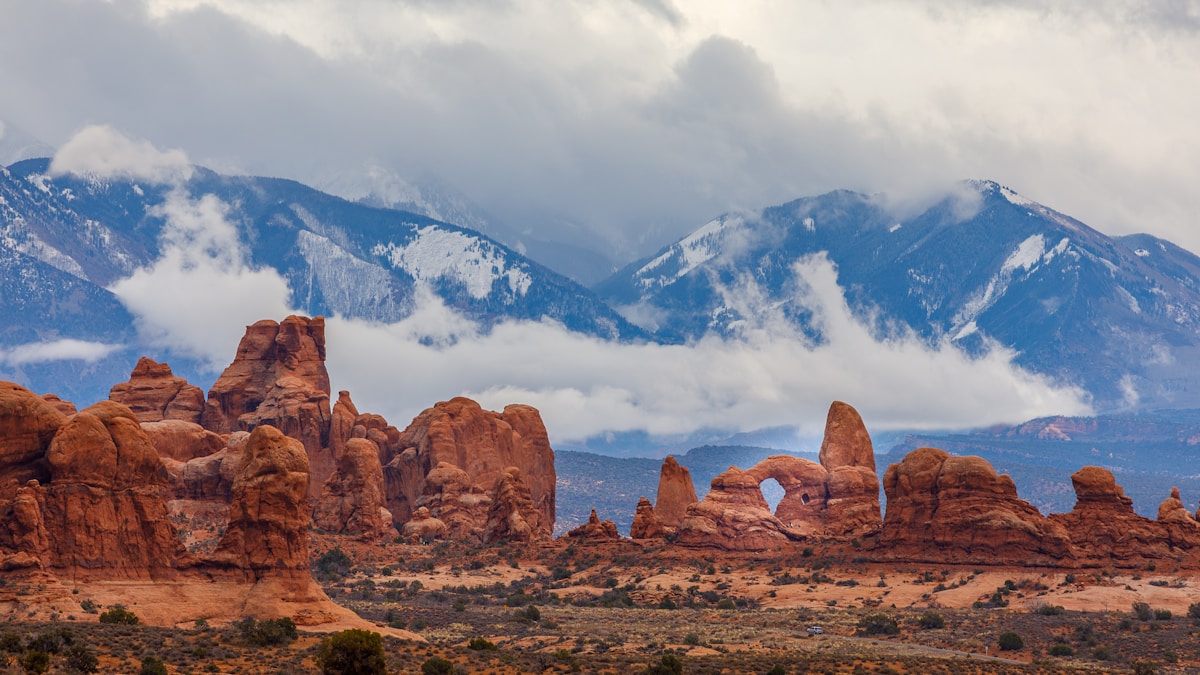
Approximately 235 miles southeast via I-15 South and US-191 North from Moab junction (around 3.5–4 hours each way — plan for a 4 am departure to make it useful). Hire a car if you haven’t already — there is no public transit to Moab. Arches National Park entrance fee approximately $35 per vehicle as of 2026; book a timed entry permit on recreation.gov for April–October — these sell out. The Windows Section (a 2-mile loop hitting four major arches) and Landscape Arch (a 1.6-mile flat trail) are the highest return per mile in the park. Delicate Arch (3 miles round trip, 480 feet gain, exposed sandstone) is the one everyone recognises — arrive before 8 am to avoid the worst of the heat and the crowds. In Moab town, Moab Brewery has the best sit-down lunch. Dead Horse Point State Park (approximately $20 vehicle as of 2026), 30 miles from Moab, gives the most dramatic Colorado River canyon view in the state with a 30-minute walk from the parking lot.
Bonneville Salt Flats — the white nothing
Approximately 100 miles west via I-80 West (around 1 hour 20 minutes to the Bonneville Speedway exit), the Bonneville Salt Flats BLM area is free to access — drive onto the salt, get out, and stand in a landscape that looks like a science fiction film set. The flats are the remnant lake bed of prehistoric Lake Bonneville, which once covered most of western Utah. Land speed racing (Speedway season July–October) adds a cultural layer, but the landscape alone is worth it outside season. Wendover straddles the Utah-Nevada border at the end of the I-80 run — the Nevada side has casinos; the Utah side has the Enola Gay hangar where the aircraft was prepared for the Hiroshima mission (now the Wendover Air Force Base Historic District, free to view). Half-day excursion.
Timpanogos Cave National Monument — the mountain cave
Approximately 35 miles south of Salt Lake City via I-15 and US-189 (around 40–50 minutes to the trailhead parking at American Fork Canyon; entrance fee approximately $10 per adult for cave tour as of 2026, plus $6–8 for parking), Timpanogos Cave requires a 1.5-mile uphill hike (1,092 feet gain) to reach the cave entrance — allow 3–4 hours total for the hike and 1-hour guided cave tour. The cave system is known for its helictite formations (mineral crystals that grow in defiance of gravity) and the vivid greens and reds from iron and copper minerals. Book cave tours at recreation.gov — they fill completely in summer. The American Fork Canyon drive itself, through a spectacular limestone canyon, is worth the trip even if the cave is full.
Zion National Park — the long-weekend borderline
Approximately 310 miles south via I-15 (around 4–4.5 hours one way). Zion is technically doable as a day trip but it leaves you approximately 2 hours in the park. If you go, target the Emerald Pools (easy; 3-mile loop) or Riverside Walk (2 miles flat, paved, along the Virgin River narrows). Park fee approximately $35 per vehicle as of 2026. Realistically, Zion deserves two nights in Springdale — the Angels Landing permit lottery and the Narrows wading hike both need more time than a day allows.
Practical tips
- Arches timed entry permits are mandatory April–October and release in waves at recreation.gov — set an alert and book the moment your window opens
- Park City ski traffic on powder days backs up through Parley’s Canyon — budget extra time or take I-80 after the first rush
- Antelope Island brine flies are worst July–August from late afternoon; morning visits are much more pleasant
- Bonneville in summer heat can reach 100°F+ — carry 2 litres of water per person minimum
- Canyon road closures after flash floods are common in Utah; check Utah 511 before driving US-191 to Moab
- Prices as of 2026 — confirm at nps.gov, recreation.gov, and venue sites before travelling
For guided day trips from Salt Lake City, see GetYourGuide’s Salt Lake City selection — Arches park tours and Antelope Island excursions run year-round.
More Salt Lake City Guides
Frequently Asked Questions
- Can you do Arches National Park as a day trip from Salt Lake City?
- Yes, but it is a long one — approximately 235 miles southeast via I-15 and US-191 (around 3.5–4 hours each way). Most visitors prefer Moab as a base for Arches and Canyonlands, but a focused day trip targeting the Windows Section and Delicate Arch is achievable if you leave Salt Lake by 5–6 am.
- How far is Park City from Salt Lake City?
- Approximately 30 miles east via I-80 (around 35–45 minutes by car, or around 45–50 minutes on the Utah Transit Authority ski bus in winter). It is the easiest day trip from SLC — a year-round mountain town with good skiing, hiking, the Utah Olympic Park, and Main Street restaurants.
- What is Antelope Island State Park?
- A large island in the Great Salt Lake, approximately 45 minutes northwest of downtown Salt Lake City via I-15 and the causeway road (approximately $15 per vehicle as of 2026). It has free-roaming bison, pronghorn antelope, the Fielding Garr historic ranch, and excellent birding. Swimming in the hypersaline lake is possible but the brine flies can be thick in summer.
- Is Bonneville Salt Flats worth visiting?
- Approximately 100 miles west via I-80 (around 1 hour 20 minutes). The flats are free to access and the drive-on surface experience — standing on white salt stretching to the horizon with the Wasatch visible in the east — is genuinely otherworldly. Combined with Wendover, it works as a half-day. The racing season (land speed records) runs July–October.
Ready to explore?
Browse hundreds of tours and activities. Book securely with free cancellation on most options.
Browse on GetYourGuide →Best price guaranteed — same price as booking direct. We earn a small commission at no extra cost to you.