Monterey sits at the northern end of one of California’s most spectacular coastal stretches - Big Sur to the south, the Santa Cruz Mountains and surf culture to the north, the Salinas Valley agricultural heart inland to the east. The peninsula itself is packed with enough to fill several days, but the surrounding region gives Monterey visitors day-trip options that rival any destination in Northern California. From Carmel’s white sand beach at one extreme to Pinnacles National Monument’s cave-riddled talus at the other, everything worthwhile is within 90 minutes. The bay itself also supports year-round whale watching - browse Monterey tours and activities for boat excursions, guided kayaking, and Big Sur day trip options.
Carmel-by-the-Sea - 10 minutes south
Carmel is technically a city, but its half-mile main drag and cottage architecture make “village” more accurate. Ocean Avenue leads straight to a white sand beach that, combined with Carmel’s clarity of light and cypress trees, creates a setting that supported a genuine artists’ colony in the early 20th century.
The Mission San Carlos Borroméo de Carmelo (3080 Rio Rd, approximately $7 adults as of 2026, open daily) is the most beautiful of California’s 21 missions - a 1797 stone church with a Moorish-inspired fountain courtyard.
Carmel Beach: Free access, dogs allowed off-leash in the evening. Parking on Scenic Road is free but fills early on weekends.
Lunch: Carmel is dense with good restaurants. Dametra Café (Ocean Ave, approximately $20–30 per person) and The Forge in the Forest (Junipero Ave, approximately $25–35) are reliable options in the $20–35 range.
Drive from Monterey: CA-1 south, about 5 miles, 10 minutes.
17-Mile Drive and Pebble Beach - 20 minutes south
17-Mile Drive is a private toll road through the Del Monte Forest and Pebble Beach coastal bluffs - approximately $12.25 per vehicle as of 2026 (waived with qualifying restaurant or golf purchases). The drive passes the Lone Cypress (a 250-year-old tree on a rock promontory that may be the most photographed tree in North America), Bird Rock (covered in harbor seals and cormorants), and the full stretch of Pebble Beach Golf Links with views over Stillwater Cove.
Drive from Monterey: Pacific Grove Gate entrance via CA-68 west, about 4 miles, 20 minutes.
Best season: Year-round. Wildflowers along the bluffs peak in February through April. Fog is most common mornings in June and July.
Big Sur - 45 minutes to 2 hours south
Big Sur is not a town but a 90-mile stretch of coast between Carmel and San Simeon where the Santa Lucia Mountains meet the Pacific. The specific highlights within a day trip from Monterey:
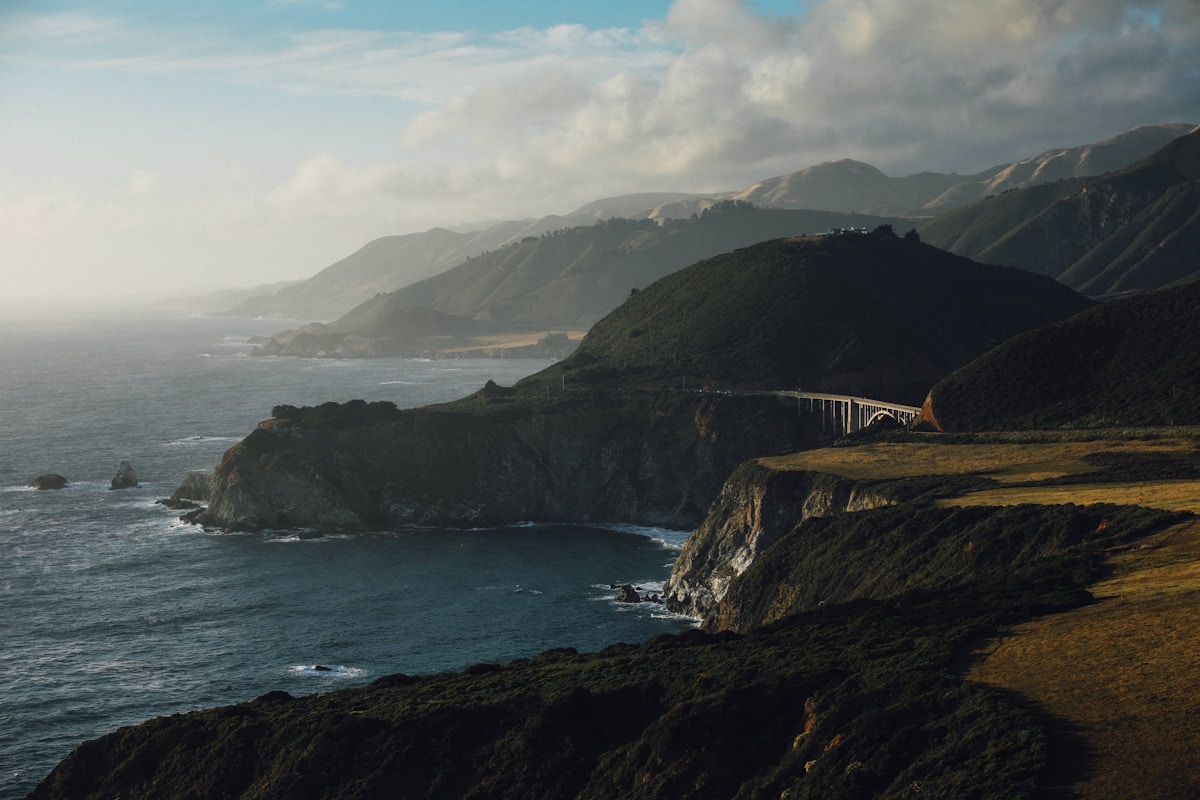
Bixby Bridge (mile 13 south of Carmel): A 1932 concrete arch spanning a canyon 260 feet above the creek - the most photographed bridge in California. No entry fee; roadside pull-outs on both sides.
Pfeiffer Big Sur State Park (CA-1, approximately $10 day-use as of 2026): The main Big Sur gathering point, with the Big Sur Lodge, Pfeiffer Falls Trail (1.3 miles round-trip), and river swimming in the Big Sur River.
Search hotels in Monterey on Booking.com
Julia Pfeiffer Burns State Park (approximately $10 day-use as of 2026): McWay Falls, the only waterfall in California that drops directly onto a beach, is an 800-foot walk from the parking lot - open daily.
Drive from Monterey: CA-1 south. Bixby Bridge is 45 minutes; Pfeiffer Big Sur State Park is 1.25 hours; Julia Pfeiffer Burns is 1.5 hours.
Important: CA-1 is subject to closures after storms and landslides - check Caltrans (dot.ca.gov) before heading south, especially in winter and spring.
Santa Cruz - 45 minutes north
Santa Cruz has a distinct coastal California identity centered on the UC Santa Cruz campus, the 1907 beach boardwalk, and a surf culture that considers itself separate from Southern California entirely. The contrast with Monterey’s genteel character is part of the appeal.
Santa Cruz Beach Boardwalk (entry to the boardwalk is free; ride tickets approximately $3–7 each as of 2026): The oldest surviving amusement park on the West Coast, open weekends year-round and daily in summer.
Natural Bridges State Beach (approximately $10 parking as of 2026): Named for its natural rock arch; a major monarch butterfly overwintering site from October through February - up to 100,000 butterflies when conditions are right.
Pacific Avenue: The main commercial street has good independent bookshops, coffee, and lunch options averaging approximately $15–20.
Drive from Monterey: CA-1 north, about 42 miles, 45 minutes.
Salinas and the Steinbeck Country - 30 minutes east
Salinas is better known as a lettuce-producing center than a tourist destination, but it holds the National Steinbeck Center (1 Main St, approximately $15 adults as of 2026), a well-designed museum honoring the Nobel Prize–winning author born here in 1902. Of Mice and Men, East of Eden, and The Grapes of Wrath were all set in the Salinas Valley - the context the museum provides is worth pairing with the farmland drive down US-101.
Steinbeck’s birthplace (132 Central Ave): The house where he was born is now a restaurant; the exterior can be viewed for free.
Drive from Monterey: CA-68 east to US-101 north, about 22 miles, 30 minutes.
Pinnacles National Monument - 1.5 hours southeast
Pinnacles is one of the least-visited national parks in California and one of the more surprising: jagged volcanic spires rising to 3,304 feet, intersected by talus cave passages that are the year-round roost for California condors - among the rarest large birds in the world.
Entry: Approximately $30 per vehicle as of 2026. Two cave trail systems (Bear Gulch Caves and Balconies Caves) require headlamps and are open seasonally depending on bat roosting - check the park website before going. The High Peaks Trail (9.9 miles round-trip) offers the best views of the formations and near-certain condor sightings.
Drive from Monterey: CA-68 east to US-101 south to CA-146 east, about 72 miles, 1.5 hours to the west entrance.
Elkhorn Slough Reserve - 30 minutes north
Elkhorn Slough is a 1,400-acre coastal wetland estuary just north of Monterey - one of California’s largest remaining coastal wetlands and a wildlife density hotspot. Sea otters, harbor seals, and over 340 bird species use the slough. Kayak tours from Moss Landing (approximately $60–80 per person as of 2026) put paddlers in the middle of the otter population.
Reserve visitor center entry: Approximately $5 per adult as of 2026, open Wednesday–Sunday. Self-guided trails cover about 5 miles through the wetlands. Book Elkhorn Slough kayak tours well ahead - otter viewing spots fill quickly in summer.
Drive from Monterey: CA-1 north to Moss Landing, about 15 miles, 25 minutes.
For more on the area, see our guides to things to do in Monterey, where to stay in Monterey, and where to eat in Monterey. For guided excursions, browse Monterey tours and activities.