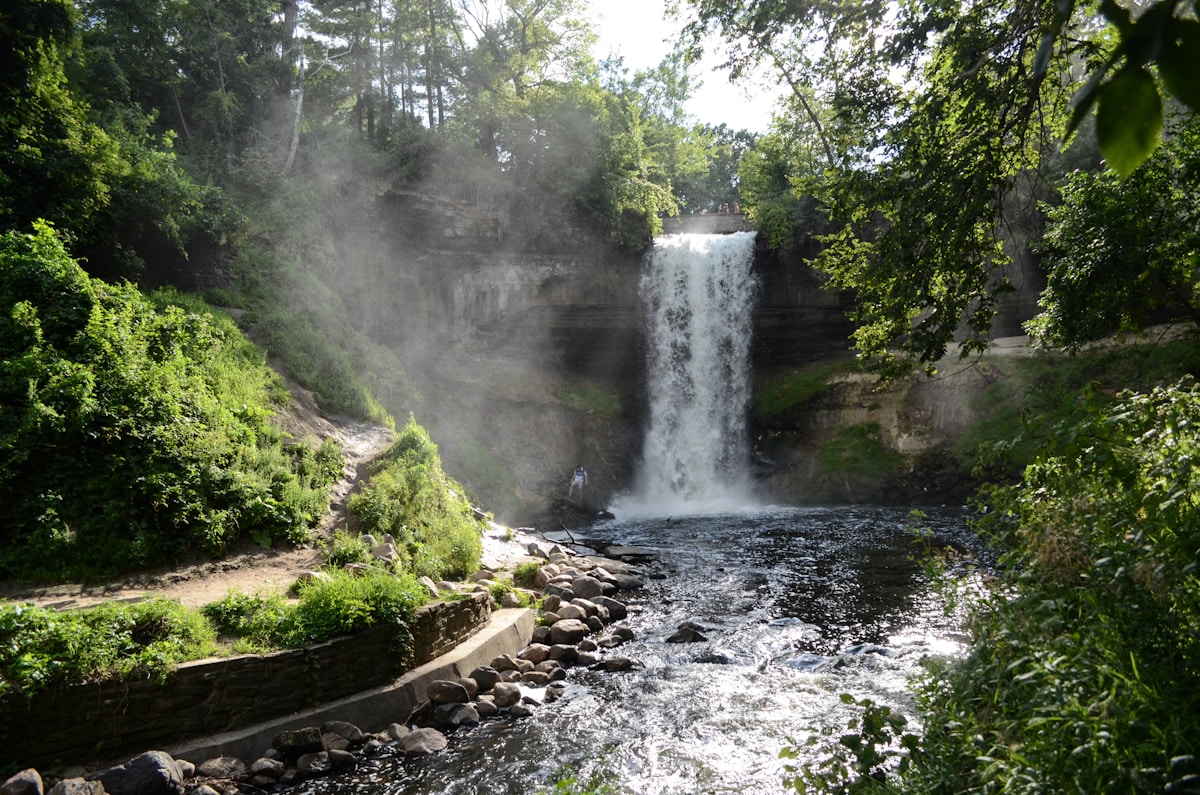
Minneapolis concentrates its major cultural institutions within a small geography - the Walker, the Mia, the Guthrie, and the Mill City Museum are all within 2 miles of each other. The outdoor recreation system (the Chain of Lakes, the Grand Rounds) is unusual for a northern city of this size. And the music history, rooted in Prince and the club scene that produced him, gives the city a specific cultural weight that visitors from outside the Midwest often underestimate.
Walker Art Center and Minneapolis Sculpture Garden
The Walker Art Center (725 Vineland Place) is the defining institution for visual art in the Upper Midwest. The permanent collection emphasises post-1960 American and international work: the Jasper Johns numbers, Bruce Nauman video installations, Cindy Sherman film stills, and a strong contemporary photography collection. The 2005 building expansion by Herzog & de Meuron is itself a notable piece of architecture.
Adjacent and free to enter separately, the 11-acre Minneapolis Sculpture Garden contains 40+ permanent and rotating sculptures. The Spoonbridge and Cherry (1988) by Claes Oldenburg and Coosje van Bruggen is the most photographed piece of public art in Minneapolis. The garden is open daily, free, year-round (weather permitting). Museum admission approximately $15 for adults, students free on the first Saturday of each month. Open Tuesday–Sunday 11am–5pm; Friday until 9pm.
Minneapolis Institute of Art
Mia (2400 Third Ave S) holds over 90,000 works from 6,000 years of art history across 239 galleries. The collection is unusually comprehensive for a free institution: a strong Egyptian and ancient Mediterranean section, one of the best Chinese furniture galleries in the United States, a Japanese period room, a Dutch Golden Age collection including a Rembrandt self-portrait, and an American collection spanning colonial-era portraiture through contemporary work.
Permanent collection admission is free. Special exhibitions run approximately $15–$20 for adults. Open Tuesday–Sunday 10am–5pm (Thursday–Friday until 9pm). The museum is a 15-minute walk south of downtown or accessible by bus from Nicollet Mall.
Paisley Park
Paisley Park (7801 Audubon Rd, Chanhassen) is Prince’s former production compound - 65,000 square feet of recording studios, rehearsal stages, and living quarters - where he died on April 21, 2016. It opened for public tours in October 2016 and has operated continuously since. The standard tour covers the main recording studios (Studio A, Studio B, and the NPG Music Club), the Atrium where Prince’s ashes are interred in an urn shaped like Paisley Park itself, and his personal space with items from his wardrobe and memorabilia collection.
Standard tour approximately $45 per person; VIP tours approximately $100 as of 2026. Book at officialpaisleypark.com - tickets sell out weeks in advance for weekends. Located approximately 25 miles southwest of downtown Minneapolis; no public transit; drive approximately 35 minutes or book a transport-included tour package.
Stone Arch Bridge and the Mississippi Riverfront
The Stone Arch Bridge (built 1883, former Great Northern Railway) is a 2,100-foot pedestrian and cycling bridge with direct views of St. Anthony Falls - the only natural waterfall on the upper Mississippi River. The falls themselves are partly channeled by an apron added after the 1869 collapse of a tunnel system, but from the bridge they are still an impressive physical feature. Free to walk year-round.
The Mill City Museum (704 Second St S) is built into the ruins of the Washburn A Mill, which exploded in 1878, killing 18 workers, and was rebuilt before burning again in 1991. The museum uses the remaining mill ruins as gallery space, with a flour tower ride - a glass elevator running through the eight-floor mill ruin - as its centrepiece experience. Admission approximately $15 for adults as of 2026. Open Tuesday–Sunday 10am–5pm.
Chain of Lakes
The Minneapolis Park and Recreation Board manages a chain of four connected lakes in the southwest quadrant of the city - Cedar Lake, Lake of the Isles, Bde Maka Ska (formerly Lake Calhoun), and Lake Harriet - linked by parkways and paved trails. Combined, they represent one of the most used urban recreational corridors in the Midwest.
The 13-mile perimeter loop around all four lakes is accessible year-round. In summer: swimming beaches at Bde Maka Ska and Lake Harriet (free, staffed lifeguards); kayak and canoe rental from Minneapolis Canoe Rental at Bde Maka Ska (approximately $17–$20/hour as of 2026); and the Bandstand at Lake Harriet hosting free concerts Thursday–Sunday evenings (June–August). In winter: skating on Lake of the Isles when conditions allow (typically January–February).
Guthrie Theater
The Guthrie (818 S Second St) is one of the country’s leading regional repertory theatres, performing Shakespeare, American classics, and new work across three stages. The building (2006, Jean Nouvel) has an iconic blue “Endless Bridge” cantilevering 178 feet over the Mississippi, publicly accessible for free to anyone entering the building. Tickets approximately $25–$90 depending on production and seat location. Performances run year-round; check guthrietheater.org for the current season.
First Avenue and the Music Scene
First Avenue (701 First Ave N, Warehouse District) is the nightclub where Prince filmed Purple Rain (1984). It operates as a multi-genre live music venue with two stages: the main room (capacity approximately 1,500) and the 7th Street Entry (capacity approximately 250). Concerts run most nights of the year; tickets approximately $10–$40 depending on act. The exterior black walls display stars representing artists who have sold out the main room - 248 as of 2026.
The Warehouse District around First Avenue - bordered by Washington Ave, Hennepin Ave, First Ave, and Fifth St - has the highest density of bars and music venues in the city. Pourhouse (1828 Hennepin Ave), the Depot (225 Third Ave S, in a converted train shed), and the Dakota Jazz Club (1010 Nicollet Mall) add to a concentrated nightlife geography.
Northeast Minneapolis Galleries
Northeast has approximately 40 independent art galleries, many clustered around the NE Minneapolis Arts District bounded by Central Ave, Broadway, and the Mississippi. The largest is the Northrup King Building (1500 Jackson St NE), a converted industrial complex with 200+ studios open during quarterly Art-A-Whirl (May, the largest studio art crawl in the US), Holidazzle markets, and select weekends year-round. Most gallery spaces are free to enter.
Guided Tours Worth Booking in Advance
| Tour | Duration | From | Book |
|---|---|---|---|
| True Crime ‘SHOCKING’ Trolley Tour | 90 min | $49 | Book |
| Lake Minnetonka Boat Cruise with Narration | 90 min | $37 | Book |
| Stone Arch Bridge & Riverwalk Food Tour with Tastings | 3 hrs | $92 | Book |
| Gray Line City Tour with Stone Arch Bridge Stop | 2 hrs | $49 | Book |
| Prince Landmarks Segway Audio/Visual Tour | 3 hrs | $190 | Book |
Browse all Minneapolis tours on GetYourGuide - free cancellation on most bookings up to 24 hours before departure.
More Minneapolis Guides
Minneapolis is one of the starting points for the Empire Builder train route - Amtrak’s scenic rail line connecting the Twin Cities to Seattle and Portland through the northern Rockies and Cascades.