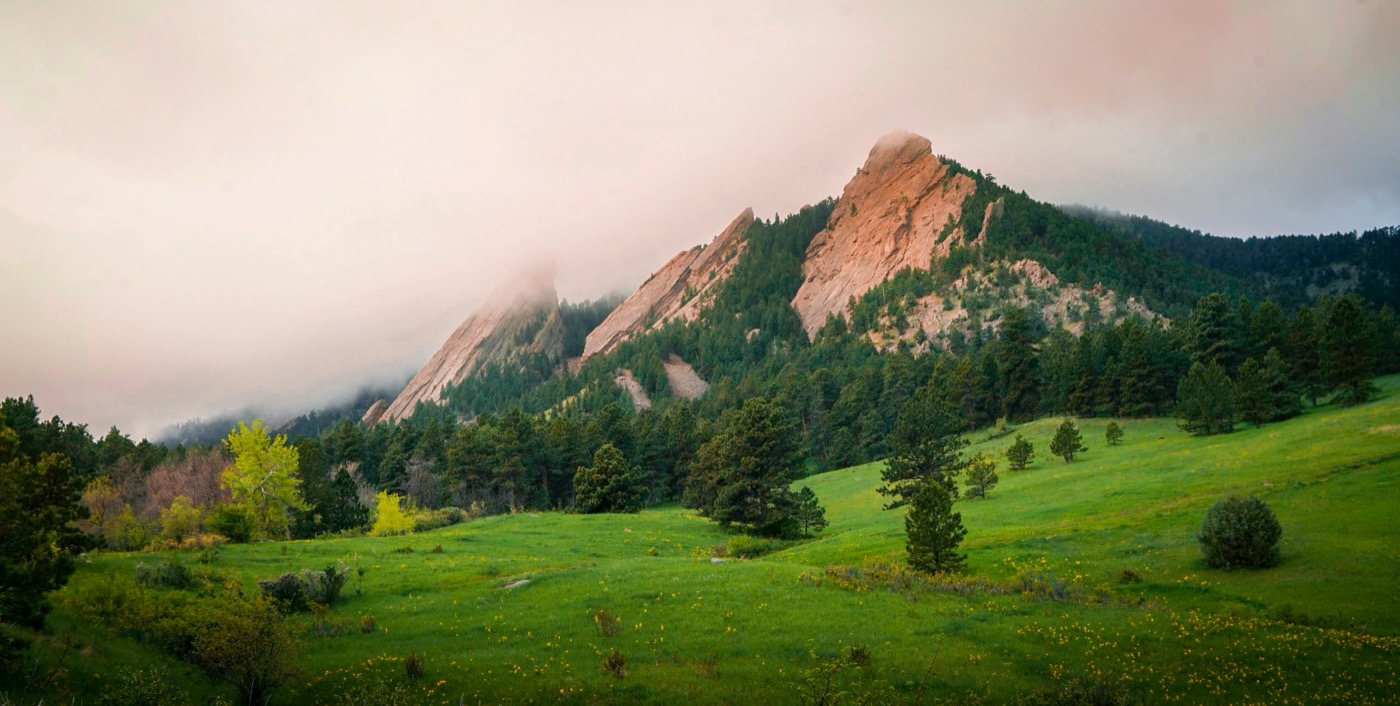
Boulder’s position at the base of the Rocky Mountains front range means an unusual concentration of genuinely significant destinations within 90 minutes. You’re not making concessions to reach them — Rocky Mountain National Park, Eldorado Canyon, and Red Rocks are all world-class in their own right, not just “worth a detour.” Planning even one day trip into the mountains will change your impression of what Colorado actually looks like beyond the city.
Rocky Mountain National Park
Rocky Mountain National Park is the most significant day-trip destination from Boulder and one of the most visited national parks in the US. The main entrance at Beaver Meadows is approximately 36 miles northwest, typically 1 hour to 1 hour 20 minutes via US-36 through Lyons. Book Rocky Mountain National Park tours for guided hikes and wildlife-watching excursions.
The essentials: The park covers 415 square miles and reaches elevations of 14,000-plus feet. Trail Ridge Road — the 48-mile alpine highway running across the park from Estes Park to Grand Lake — is the most dramatic drive in Colorado. From the top at 12,183 feet, you’re above treeline looking at genuine tundra with views that stretch 50-plus miles.
Timed entry permits: From late May to mid-October, the Bear Lake Road Corridor (which covers the most popular trailheads including Bear Lake, Emerald Lake, and Mills Lake) requires a timed-entry permit. Permits are free and available at recreation.gov — they release 2 days before each date. Book the moment your travel dates are set. The rest of the park, including Moraine Park and Fall River entrance, operates without permits outside of certain peak hours.
Best day-trip routes from Boulder:
The Emerald Lake Trail (3.6 miles round trip, 605 feet elevation gain) is the most accessible hike with genuinely spectacular payoff. It passes Bear Lake, Nymph Lake, Dream Lake, and Emerald Lake — each progressively higher and more dramatic. Start by 8am in summer to beat afternoon crowds.
Mills Lake (5.4 miles round trip, 700 feet elevation gain) is slightly longer and often less crowded than the Emerald Lake route. The lake sits in a dramatic bowl beneath Longs Peak, the park’s highest summit at 14,259 feet, and the reflections on calm mornings are exceptional.
Trail Ridge Road alone is worth the drive if you’re not a hiker. Park at the Alpine Visitor Center (11,796 feet) and walk the short Tundra Communities Trail (0.6 miles) to stand on actual alpine tundra and see what Colorado’s highest landscapes look like. The drive from Estes Park to the visitor center and back takes about 2 hours round trip.
Practical logistics: Entry is $35 per vehicle (or free with an America the Beautiful annual pass at $80). Gas is expensive near Estes Park — fill in Boulder before heading out. → Find hotels near Rocky Mountain National Park if making this an overnight trip. The Bear Lake parking area fills by 8am on weekends in summer; if you arrive and it’s full, the park shuttle from the Glacier Basin Campground staging area runs continuously and is the better option anyway. Pack layers — temperatures at elevation are 15-25 degrees cooler than in Boulder even in July.
Eldorado Canyon State Park
Eldorado Canyon is 8 miles south of Boulder — a 15-minute drive that delivers one of Colorado’s premier rock climbing locations and a beautiful canyon hike accessible to non-climbers. The entry fee is $10 per vehicle.
The Eldorado Canyon Trail (3.7 miles, moderate) follows the creek through the canyon to a high ridge with views of the Flatirons and distant Denver. The canyon walls rise steeply on both sides, and watching experienced climbers ascend the near-vertical faces is an attraction in itself. The canyon narrows dramatically in places and the trail involves some rocky scrambling.
For climbers, Eldorado offers more than 500 established routes from beginner to expert on Bastille Wall and Wind Tower. Guided climbing experiences can be booked through local Boulder guide services for approximately $150-200 per person for a half-day introduction.
Eldorado is also an excellent option on days when Chautauqua is overcrowded — same landscape character, significantly fewer people.
Estes Park
Estes Park is the gateway town to Rocky Mountain National Park, approximately 35 miles northwest of Boulder. Most visitors pass through Estes Park en route to the park, but the town itself has a few things worth slowing down for.
The Stanley Hotel (333 Wonder View Avenue) is the famous Victorian hotel that inspired Stephen King’s “The Shining” and runs regular ghost tours. The building and mountain setting are genuinely impressive. Lunch at the hotel runs approximately $18-28 per person.
The Estes Park Riverwalk along the Fall River is pleasant for a 30-minute walk through the town center, with independent shops and a decent concentration of restaurants. Estes Park Brewery (470 Prospect Village Drive) is worth a stop for a beer before the drive back.
If you’re spending a day at Rocky Mountain National Park, combining Estes Park for an early lunch and the park for the afternoon is a natural itinerary.
Red Rocks Amphitheatre and Morrison
Red Rocks is 35 miles southeast of Boulder, approximately 45-50 minutes via US-36 to I-70 west. The 9,000-seat outdoor concert venue carved into massive red sandstone formations is one of the most photographed places in Colorado, and the surrounding Red Rocks Park is free to visit even without a concert ticket.
The Trading Post Trail (1.4 miles loop) winds through the rock formations at the base of the amphitheatre and is genuinely worth doing for the landscape alone. Morning yoga sessions happen in the amphitheatre several days a week from May through October — a uniquely Colorado experience at approximately $14-20 per session, booked at the Morrison parks website.
The nearby town of Morrison has a handful of casual restaurants worth a stop. Red Rocks Grill (300 Bear Creek Avenue) is the most convenient option — simple food, beer, and a patio.
If you’re in Boulder during a concert season, checking the Red Rocks schedule before your trip and booking a ticket to any show is highly recommended. The setting makes almost any performance memorable.
Denver: Culture and Urban Contrast
Denver is 35 miles southeast of Boulder, about 45 minutes via US-36 without traffic. It’s a half-day minimum to do much beyond seeing the downtown core, so this works best as a dedicated day trip rather than a quick detour.
Worth the trip: the Denver Art Museum (100 W 14th Avenue Pkwy) has a strong Native American art collection and a striking Daniel Libeskind-designed extension. The RiNo (River North) Art District is Denver’s most interesting neighborhood, with excellent restaurants, breweries, and street art. Union Station (1701 Wynkoop Street) is a beautifully restored train terminal with good bars and restaurants that works as a base for exploring downtown.
Denver day-trip logistics pair well with using the Flatiron Flyer bus from Boulder rather than driving — no parking stress in downtown Denver and about $9-12 round trip. For more on Colorado’s broader outdoor network from Boulder, see the national parks guide for route and permit planning across the state.